Goan Khatkhate – A Traditional Festive Delicacy
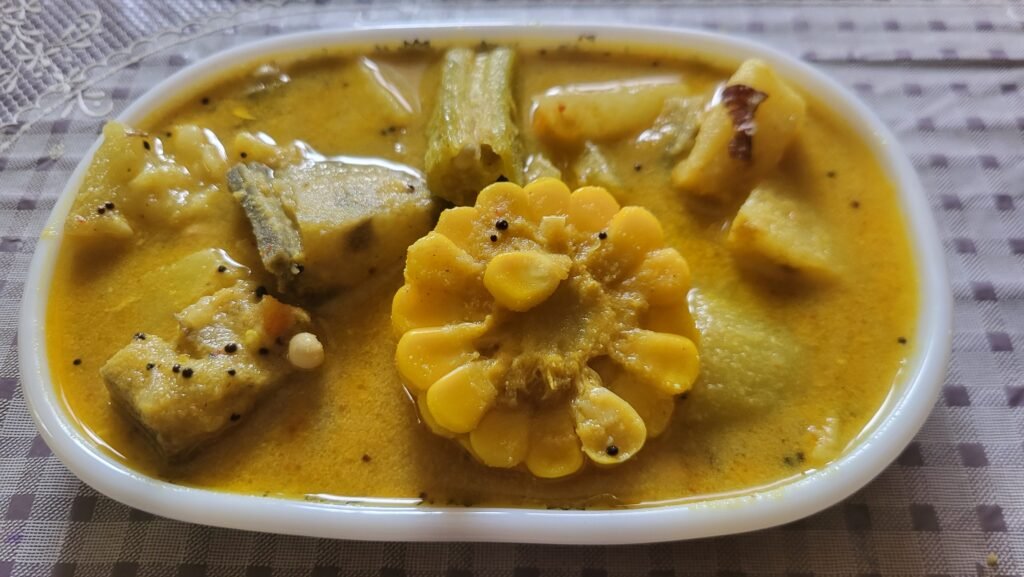
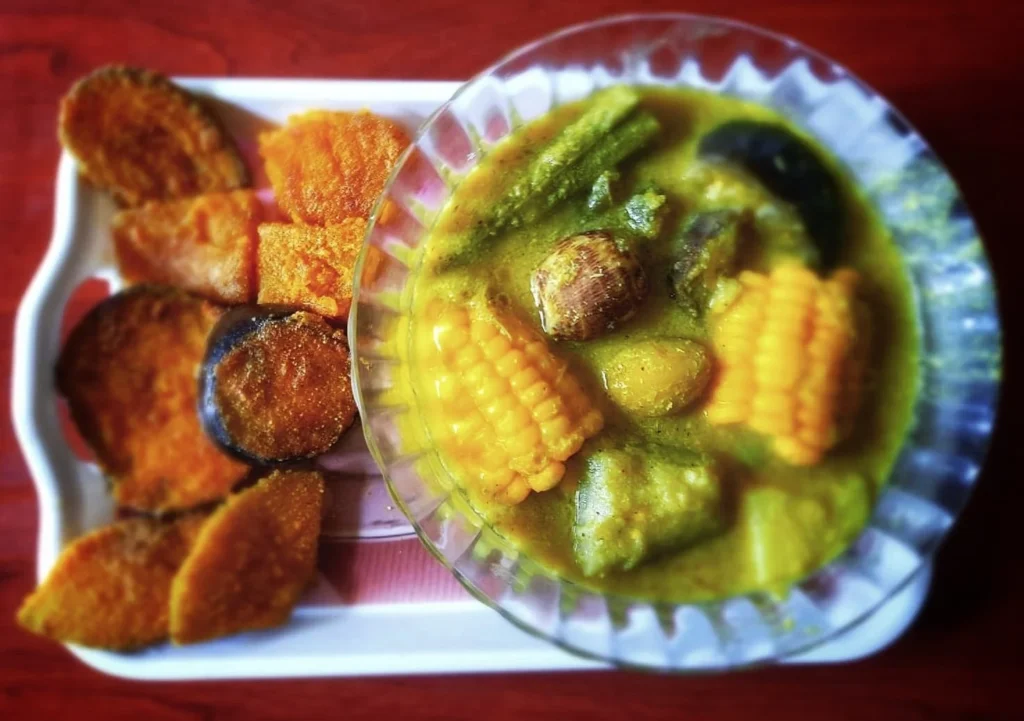
One of Goa’s most famous and delicious traditional dishes is Khatkhate. It is prepared not only in Goa but also in the Konkan region and among Saraswat communities in Maharashtra and Karnataka, as well as other communities connected with Goa, especially during Ganesh Chaturthi. It is also believed to be one of Lord Ganesha’s favourite dishes.
This vegetable dish is prepared using a variety of seasonal vegetables and tubers available during the month of Shravan, along with some vegetables that are available throughout the year. It is a special dish with a distinctive and unforgettable taste.
Each vegetable added to Khatkhate contributes its own unique flavour and aroma, giving the dish its characteristic taste. In addition, a spice called Tirphal (Sichuan Pepper), which is commonly found in Goa and the Konkan region, is used as an important ingredient.
Tirphal plays an important role in giving Khatkhate its distinctive flavour. Therefore, Tirphal is an essential ingredient in authentic Goan Khatkhate.
Since Khatkhate is offered as naivedya (food offering) to Lord Ganesha, there is also a belief that it should contain 21 different types of vegetables. So, let us see how to prepare delicious Khatkhate using around twenty varieties of vegetables.
Main Vegetables Used in Goan Khatkhate
- Radish
- Pumpkin
- Elephant foot yam (Suran)
- Brinjal/Eggplant
- Potato
- Raw banana
- Breadfruit
- Corn on the cob
- Large cucumber
- Mudli (Arvi/Colocasia)
- Drumstick
- Bamboo shoots
- Madi (Taro root)
- Ambade (Hog plums)
Other Vegetables Used in Goan Khatkhate
Apart from these main vegetables, you can also add carrots, ridge gourd, snake gourd, ivy gourd, Turnip, bottle gourd and beetroot. You may use all of these or as many as are available. If desired, you can also add peanuts or green peas.
The quantity and variety of vegetables can be adjusted according to the number of people you are preparing the Khatkhate for and according to your preference.
Other Ingredients for Traditional Goan Khatkhate
Toor Dal: 1 cup
(If you do not want to use toor dal, you can use green peas soaked overnight instead.)
Coconut: ½ or 1 whole coconut (Use ½ coconut if adding toor dal; if not using toor dal, use 1 whole coconut, or adjust the quantity of coconut according to the amount of vegetables.)
Ginger: 1 inch piece
Tirphal: 10–12
Dried red chillies: 8–10
(Adjust the quantity depending on the type of chillies used.)
Green chillies: 2
Tamarind: Lemon-sized piece
(If ambade/hog plums are used, tamarind is not necessary.)
Finely chopped jaggery: 1 tablespoon
Turmeric: ½ teaspoon
Salt: As required
Tempering Ingredients
Coconut oil or any cooking oil: 1 tablespoon
Mustard seeds: 1 tbspoon
Asafoetida (Hing): 1/2 teaspoon
Curry leaves:10-15 leaves
How to Make Authentic Goan Khatkhate
Step 1: Cook the Dal
Cook the toor dal or green peas well in a pressure cooker.
Step 2: Prepare the Coconut Masala
Grind grated fresh coconut, dried red chillies, ginger, two Tirphal, tamarind and turmeric together in a mixer until finely ground.
Step 3: Cook the Vegetables That Take Longer
Take a large cooking pot and add all the vegetables that require more time to cook and do not easily become mushy after cooking, such as corn on the cob, bamboo shoots, jackfruit seeds, peanuts, etc.
Crush Tirphal and add them to the pot.
Add enough water to cover the vegetables and a little salt. Cover the pot with a plate filled with water and cook the vegetables over a medium flame.
Step 4: Add the Remaining Vegetables
Meanwhile, start chopping the remaining vegetables one by one. It is preferable to cut the vegetables into large pieces.
Add the vegetables that take some time to cook first. Add a little more salt and pour the water from the plate placed over the cooking pot into the vegetables.
Again, add fresh water to the plate and cover the pot.
Stir the vegetables occasionally, bringing the vegetables at the bottom to the top and vice versa.
Step 5: Add the Quick-Cooking Vegetables and Dal
Finally, add vegetables that cook quickly, such as brinjal and drumstics etc.
Add the cooked toor dal and mix everything together.
Now add the prepared coconut masala, followed by jaggery and salt.
(Since some salt has already been added while cooking the vegetables, adjust the quantity accordingly.)
Mix the Khatkhate well and allow it to cook for some more time. Meanwhile, prepare the tempering.
Step 6: Prepare the Tempering
Heat oil in a small tempering pan.
Once the oil is hot, add the mustard seeds.
When the mustard seeds begin to splutter, add asafoetida and curry leaves, then turn off the gas.
Step 7: Finish the Khatkhate
Pour the prepared tempering into the Khatkhate and turn off the flame.
Your delicious and flavourful traditional Goan Khatkhate is ready to serve!
Note:
If you prefer, you can skip the dried red chillies and prepare Khatkhate with just fresh green chillies. The result is equally delicious.