India’s Only Temple of Devaki and Baby Krishna
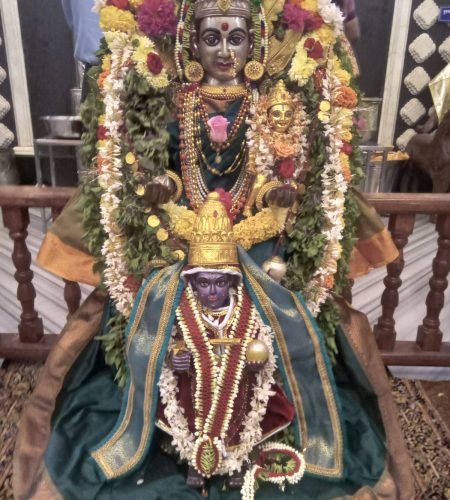
What makes this temple truly extraordinary is the fact that it is believed to be the only temple in India where Baby Krishna is worshipped together with Devaki. Devaki, the mother of Krishna, is depicted holding baby Krishna in her lap. While most Krishna temples celebrate Krishna with Radha, here one gets to witness a rare and deeply emotional form of Krishna with his birth mother, Devaki.
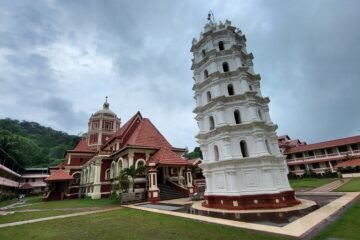
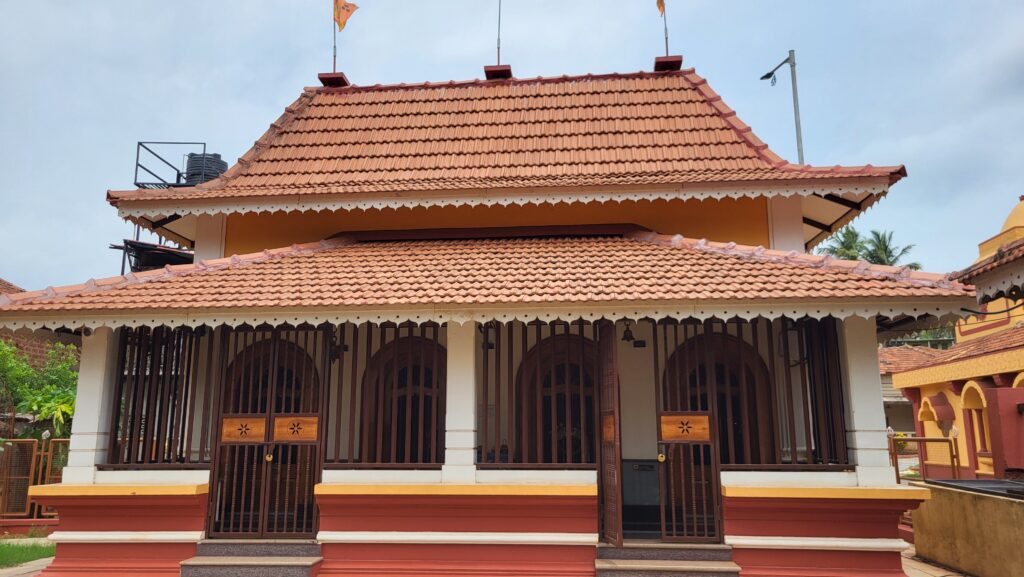
The architecture of the Devaki–Krishna temple is similar to many other temples in Goa, yet the beauty of the temple and its surroundings make it truly special. While the structure of most Goan temples follows a somewhat similar pattern, every temple has its own unique charm, making it impossible to compare one with another.
Unique Krishna Temple in Goa That Every Devotee Must Visit
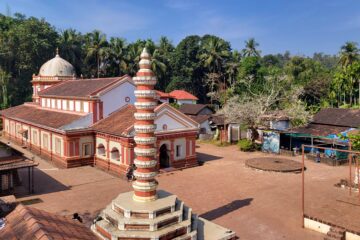
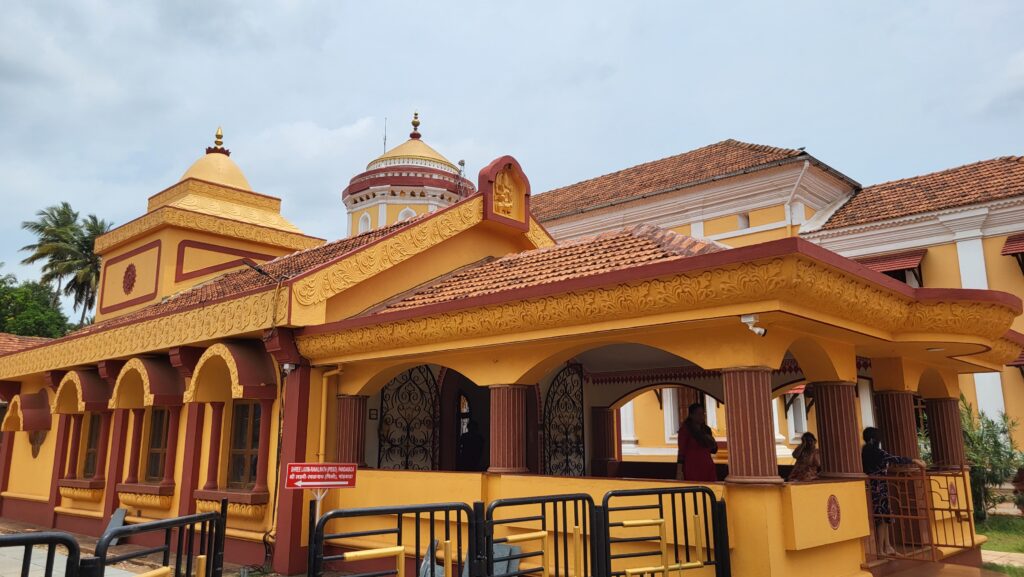
Like many ancient temples of Goa, the architecture of the Devaki–Krishna Temple reflects the traditional Goan temple style. Yet despite similarities in structure, this temple possesses a charm entirely its own. The tiled sloping roofs, elegant wooden interiors, and open spaces give the temple a warm and welcoming feel.
As you slowly walk through the temple complex, the structure unfolds beautifully. The outer assembly hall or sabhamandap opens into the central hall, locally known as the chowk or mukhyamandap, which stands before the sanctum. Between these sections lies the Antaral, creating a graceful transition toward the sacred garbhagriha.
The open sabhamandap, supported by strong pillars on both sides, allows cool air and natural light to flow freely inside. The red tiled roof seen from outside blends perfectly with Goa’s traditional landscape, while the wooden beams inside add to the beauty and traditional character of the temple. The peaceful surroundings and simple architecture together create a calm and spiritual atmosphere.
The Mesmerizing Idol of Devaki and Baby Krishna
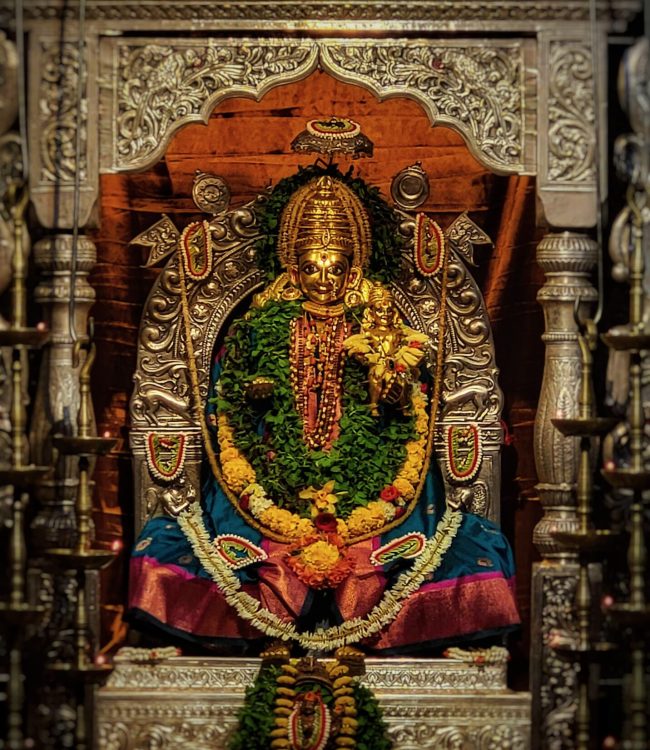
The soul of this temple undoubtedly lies in its stunning idol of Mother Devaki holding baby Krishna in her lap. The idol, believed to be over 400 years old, is crafted in traditional Gujarati style using black stone and later adorned with a golden exterior.
The affectionate smile on Devaki’s face and the image of baby Krishna seated on her lap immediately capture the attention of devotees. One feels like looking endlessly at this beautiful idol filled with motherly affection and divine warmth.
The Emotional Story Behind Devaki and Baby Krishna Together
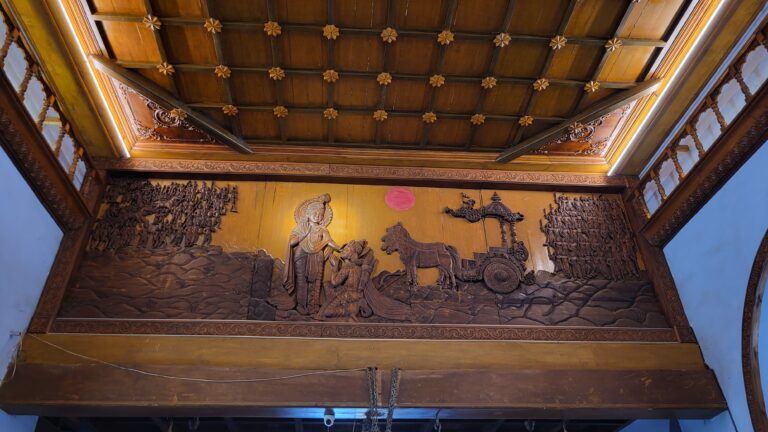
For many devotees, one question naturally arises—if Krishna grew up with Yashoda, why is baby Krishna shown with Devaki here?
The answer lies in a touching story associated with Krishna’s reunion with his birth mother.
It is said that after the death of Kansa, when Devaki was finally freed from imprisonment, she saw Krishna before her for the first time. Overwhelmed with emotion, wonder, and motherly affection, she could hardly believe that this divine child standing before her was her own son.
At that moment, Krishna appeared before Devaki in his child form. Unable to control her emotions, Devaki lovingly lifted baby Krishna into her lap. This beautiful moment of reunion between mother and child is what the idol at the temple represents.
Perhaps this is why the idol feels so deeply emotional to devotees—it captures not just divinity, but the timeless bond between a mother and her child.
Fascinating History of the Devaki–Krishna Temple in Goa
The history of the temple itself is equally fascinating and closely connected with Goa’s turbulent past during Portuguese rule.
Originally, the temple was located in Chodan in Tiswadi taluka. However, during the Portuguese religious persecutions, many Hindu temples in Goa were relocated to safer regions. The idol of Devaki Krishna was first moved to Mayem in Bicholim taluka.
But history repeated itself once Bicholim too came under Portuguese control. To protect the sacred idol, devotees once again shifted it—this time to Marcel, where the present temple stands today.
The current temple structure was established in 1842. However, before the temple was formally built, it is believed that the idol was safely preserved inside the house of a local Brahmin family.
Famous Chikhal Kalo Festival and Krishna Janmashtami Celebrations
Throughout the year, several festivals bring the temple to life with devotion and celebration. Festivals like Krishna Janmashtami, Govardhan Pratipada, Bali Pratipada, Rathasaptami, Lakshmi Pujan, and Margashirsha Dashami–Ekadashi are celebrated with great enthusiasm.
However, among all these festivals, the famous Chikhal Kalo festival draws devotees from across Goa and beyond.
Celebrated during the Ashadha month, Chikhal Kalo is one of Goa’s most unique traditional festivals. Men and boys enter the muddy field in front of the temple and joyfully roll in the mud, recreating Krishna’s playful childhood games. The atmosphere during the festival is filled with devotion, excitement, music, and cultural energy.
The festival beautifully preserves Goa’s ancient traditions and remains one of the most awaited Hindu festivals in Goa.
Janmashtami at Devaki–Krishna Temple: A Celebration That Feels Real
Among all experiences at the temple, Janmashtami celebrations remain truly unforgettable.
As evening falls and the temple fills with devotees, the atmosphere slowly becomes deeply devotional. Around 8 PM, the kirtan narrating Krishna’s birth begins inside the temple.
What makes this celebration extraordinary is that Krishna’s birth is not merely narrated—it is reenacted before the devotees.
A priest or a devotee dressed traditionally represents Devaki, standing behind a veil. As sacred verses echo through the temple, the symbolic birth of Krishna takes place.
The moment the veil is removed and devotees witness Devaki holding baby Krishna, an overwhelming spiritual emotion spreads across the hall. Soon afterward, baby Krishna is placed into a cradle.
Two priests gently swing the cradle while singing the traditional chant:
“Koni Govind ghya, Koni Gopal ghya…”
The entire atmosphere during this moment makes devotees feel as though they are witnessing Krishna’s birth in reality.
Later, the priests carry baby Krishna among the devotees, touching the idol to their heads as blessings are offered personally to everyone present.
It is not merely a festival—it becomes an emotional spiritual experience that remains in memory for years.
Other Temples and Deities Around the Temple Complex
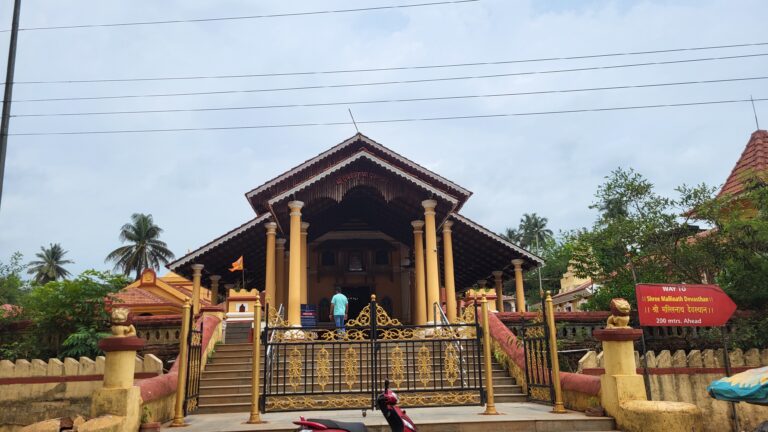
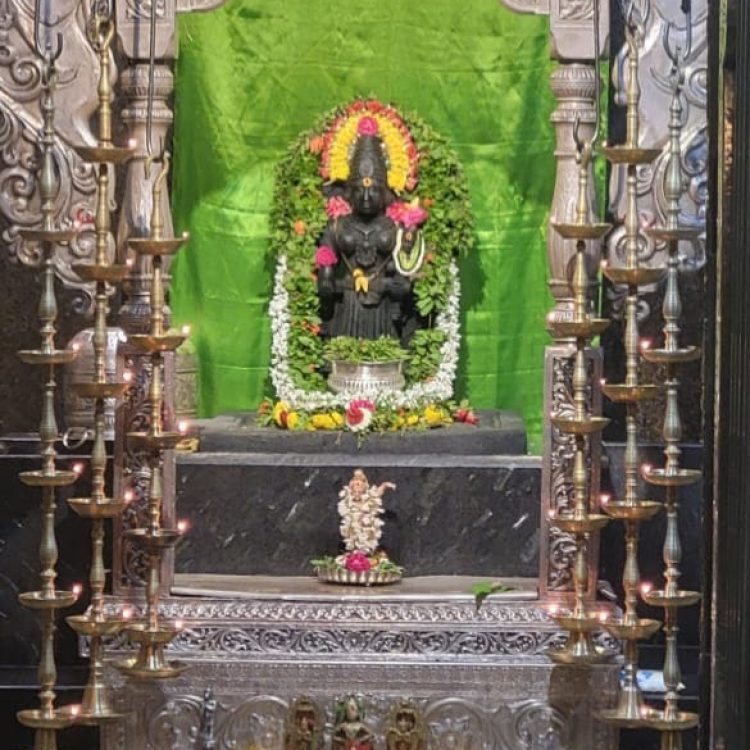
The spiritual beauty of the temple extends beyond the main sanctum. Around the temple complex are shrines dedicated to several other deities including Shri Lakshmi Ravalnath, Shri Dadsakhal, Shri Ram Purush Mhale Purush, Shri Bhumika Devi, and the Panchisht Deities.
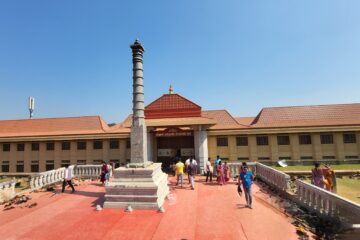
Across the open field in front of the temple lies a community hall, accommodation rooms for devotees, and a canteen serving simple yet delicious maha prasad after the afternoon aarti.
The simplicity of the food, combined with the peaceful atmosphere, completes the entire spiritual experience beautifully.
Devaki–Krishna Temple Timings, Location, and Travel Information
The Devaki Krishna Temple is located in Ponda taluka, around 17 kilometres from Panaji and approximately 3 kilometres from the Banastari Bridge on the Panaji–Ponda highway route.
The temple opens daily at 6:00 AM and remains open until the night aarti at 8:30 PM.
Daily Aarti Timings
- Afternoon Aarti – 12:30 PM
- Night Aarti – 8:30 PM
The peaceful morning hours and evening aarti time are especially ideal for experiencing the temple’s spiritual atmosphere.
Famous Temples Near Devaki–Krishna Temple Worth Visiting
A visit to the Devaki–Krishna Temple can also be combined with several other famous temples nearby.
Some well-known temples located within a short distance include the Mahaganapati Temple-Khandola, the Mandodari Temple-Betki, and the Ananta Temple at sovoi-verem.
Together, these temples offer a beautiful spiritual trail through the cultural heart of Goa.
Why the Devaki–Krishna Temple Leaves a Lasting Impression
Some temples impress with grandeur, while others stay in memory because of the emotions they awaken. The Devaki–Krishna Temple belongs to the second kind.
From the touching idol of Devaki and baby Krishna to the emotional Janmashtami celebrations and the temple’s remarkable history, every corner of this temple carries devotion, heritage, and warmth.
Even long after leaving Marcel village, one continues to remember the peaceful smile of Devaki holding Krishna lovingly in her lap—a sight that quietly remains in the heart forever.