Introduction: Discover One of Goa’s Most Unique Spiritual Destinations
When people think of Goa, beaches and nightlife usually come to mind. But beyond the coastline lies a completely different side of Goa — one that is rich in culture, tradition, and spirituality.
One such hidden gem is the temple of Goddess Lairai in Shirgao. Known for its unique form of worship and the extraordinary Lairai Jatra, this temple is among the most fascinating spiritual places in Goa and a must-visit for those interested in cultural tourism and offbeat travel experiences.
If you’re planning to explore hidden places in Goa or looking for a meaningful travel experience beyond beaches, this guide will help you plan your visit.
Where is Lairai Temple Located?
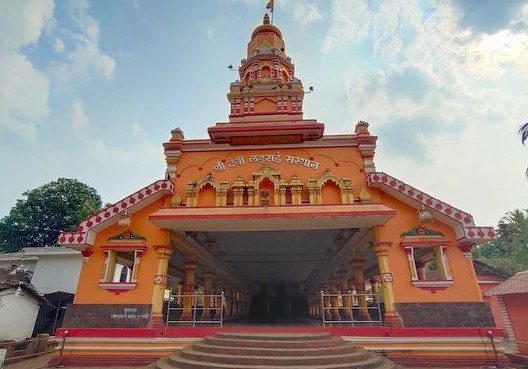
Lairai Temple is situated in Shirgao village in the Bicholim taluka of North Goa. The temple is easily accessible yet remains untouched by heavy tourist crowds, making it ideal for peaceful exploration.
How to Reach
The most convenient route is from Mapusa via Thivim and Assonora. Shirgao is a small settlement located in the Bicholim taluka. From Assonora as you move closer to Shirgao, the roads narrow and the surroundings become greener, offering a scenic drive that perfectly fits the idea of Goa offbeat travel.
The final stretch feels almost symbolic — At what seems like the end of the road, stands the temple — as though the path concludes at its feet. But from that point, the road curves right again and continues deeper into the village.
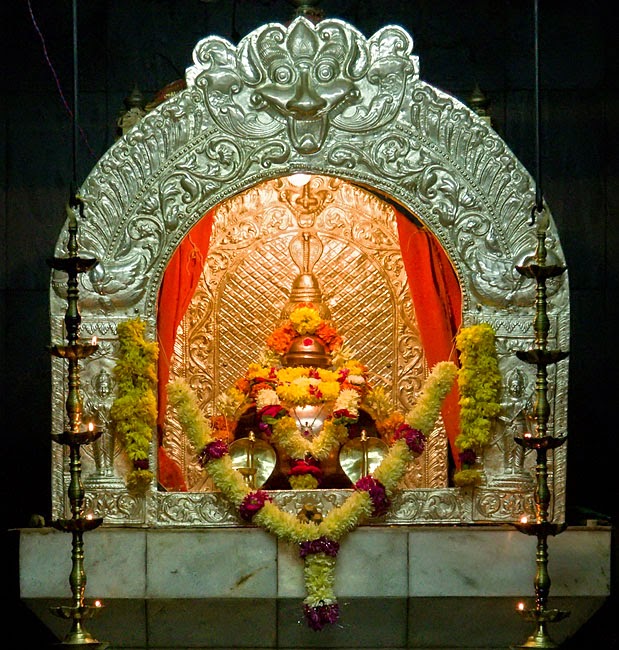
What Makes Lairai Temple Unique?
What sets the Lairai Temple apart from most temples in India is its form of worship.
There is no traditional idol in the sanctum. Instead, the goddess is worshipped in the form of a sacred kalash (inverted copper pot), covered with cloth and crowned. The commonly seen image of Goddess Lairai — wearing a green sari, her left leg bent across like in a seated posture, the right leg folded tightly to her stomach, with her right elbow resting on that knee and her palm positioned near her chest— is symbolic and believed to have originated from a devotee’s dream.
This makes it one of the most unique temples in India, attracting not just devotees but also travelers interested in Hindu traditions, temple rituals, and spiritual experiences.

The Famous Lairai Jatra: Fire Walking Festival in Goa
The biggest highlight of this temple is the Lairai Jatra, one of the most extraordinary festivals in Goa.
During this festival, a massive fire pit is prepared, and devotees known as dhonds walk barefoot across burning embers. The reason why the dhonds perform this ritual lies in a remarkable story of Lairai and her siblings. This ritual, performed in the early hours (around 3:00 AM to 4:00 AM) of the morning, symbolizes faith, devotion, and spiritual strength.
What makes it even more powerful is the preparation — participants follow strict discipline for nearly a month, including a vegetarian diet and spiritual practices. This makes the event a major attraction for those exploring unique Indian festivals, religious tourism in India, and Goa cultural experiences.
Best Time to Visit Lairai Temple
While the temple can be visited throughout the year, your experience will vary depending on when you go.
The period during the Lairai Jatra which is on Vaishakh shuddh panchami as per the Hindu calendar (in April or May) is the most vibrant, attracting thousands of devotees. However, if you prefer a peaceful visit, the months after the monsoon offer lush greenery and fewer crowds.
Travelers interested in Goa temple tours or spiritual retreats may find the off-season equally rewarding.
The Temple’s Structure and Simplicity
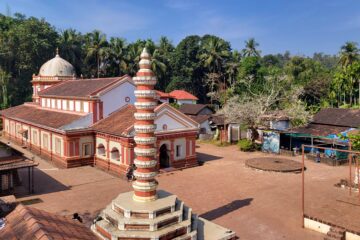
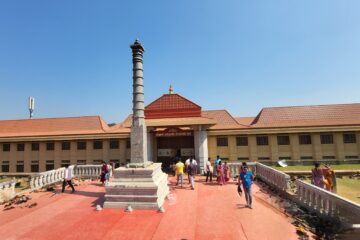
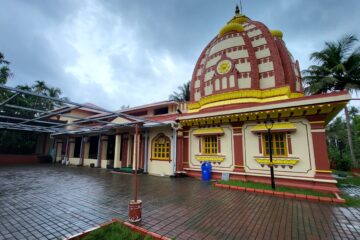
The structure of Lairai Temple follows the traditional style of Goan temple architecture— an outer assembly hall(sabhamandap), an inner hall in front of the sanctum called mahamandap or Chowk, and in between, there is usually a small to moderately sized room known as ardhamandapa.
Originally a small shrine, it was expanded and rebuilt into a larger temple around forty years ago.
The temple is very simple in its design, with no use of gold, silver, or intricate wooden carvings. The halo (prabhaval) of the goddess in the sanctum has been made of gold only in recent times. Despite this simplicity, the temple does not lose any of its grandeur.
The outer assembly hall is quite spacious. During the annual fair, thousands of dhonds gather here and dance while holding sticks decorated with colourful ribbons. The ardhamandap and mahamandap are also relatively large.
On the wall above the entrance to the sanctum, there is an image of Lord Vishnu, with paintings of sages on either side. On the walls flanking the doorway, there are images of four-armed Vishnu and Lord Ganesha. Above the outer doorway, Goddess Lakshmi is depicted between two elephants, while the divine gatekeepers Jaya and Vijaya stand on either side of the frame. In addition, the walls of the chowk are adorned with idols of various deities.
One of the most interesting rituals involves jasmine flowers. The goddess is believed to favor jasmine buds, and during the festival, one bud placed inside the kalash is said to remain fresh for an entire year.
Important Travel Tips for Visitors
If you’re planning a visit to Lairai Temple, keeping a few practical tips in mind will enhance your experience.
Dress modestly, as this is an active place of worship. Comfortable clothing that respects local customs is recommended.
Try to visit early in the morning or in the evening to avoid heat and crowds, especially if you are traveling during peak season.
If you plan to attend the Lairai Jatra, be prepared for large crowds and long waiting times. Arriving early is essential to get a good viewing spot for the fire walking ritual.
Respect local traditions. The village follows strict rules, including a prohibition on consuming chicken and meat, reflecting deep devotion to Goddess Lairai.
Carry water and basic essentials, as facilities in the village are limited compared to tourist hubs.
Nearby Places to Explore
A visit to Shirgao can be combined with other beautiful locations in North Goa, especially if you are planning a Goa travel itinerary beyond beaches.
You can explore Mayem Lake, a peaceful spot surrounded by hills and greenery, perfect for relaxation.
Another must-visit is Saptakoteshwar Temple, known for its historical and religious significance.
These destinations together create a perfect itinerary for travelers interested in nature, history, and spirituality in Goa.
Final Thoughts: Why Lairai Temple Should Be on Your Goa Itinerary
Lairai Temple is not just another religious site — it is an experience that reveals a deeper, more authentic side of Goa.
From its unique kalash worship to the powerful fire walking festival, every aspect of this place offers something meaningful. Whether you are a devotee, a cultural explorer, or someone looking for offbeat travel experiences in Goa, this temple deserves a place on your itinerary.
If you truly want to understand Goa beyond its beaches, a visit to Lairai Temple is a journey worth taking.