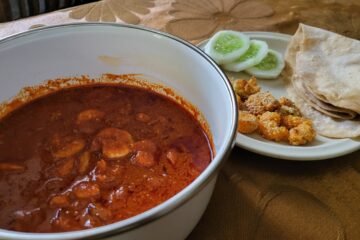
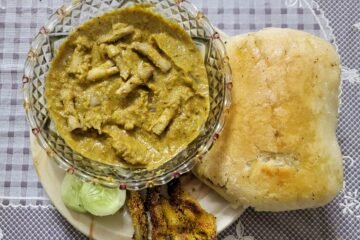
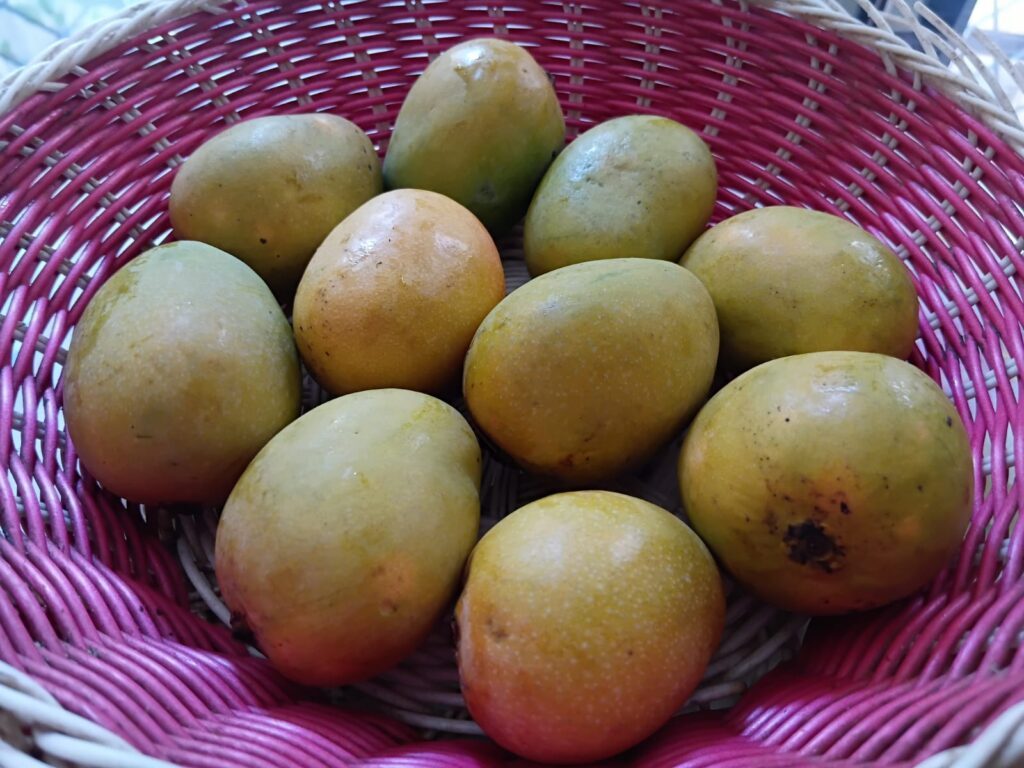
Ghota is a type of local mango that is usually peeled and enjoyed by sucking out its juicy pulp. In Goa, this tangy-sweet mango is used to prepare a traditional dish called Ghotache Sasav. In Konkani, “sasav” refers to mustard seeds.
This dish is made with a tempering of asafoetida and mustard seeds, and even the coconut paste used in it includes mustard. The result is a unique blend of flavors— a mild, almost hidden bitterness from the mustard, the sweet-sour taste of the mango, and a gentle heat from the chilies in the paste. Altogether, it creates a beautifully balanced, multi-layered dish known as Ghotache Sasav.
Ingredients & Method to Make Ghotache Sasav
Ingredients:
- ghota (local/desi mangoes): 7–8
- jaggery: 3 tablespoons
- dried red chilies: 6–7
- turmeric powder: ¼ teaspoon
- grated coconut: 1 cup
- mustard seeds: 1 teaspoon
- black peppercorns: ½ teaspoon
- Salt to taste
Ingredients for Tempering (Tadka):
- coconut oil (or any available cooking oil): 1 tablespoon
- mustard seeds: 1 teaspoon
- asafoetida (hing): 2 pinches
- curry leaves: 7–8
- fenugreek seeds: 1 pinch
Direction to cook:
- Wash the mangoes and peel off the skin.
- Lightly roast the mustard seeds on a low flame until they release their aroma.
- In a mixer, grind the grated coconut, dried red chilies, roasted mustard seeds, black peppercorns, and turmeric into a smooth paste, adding a little water as needed.
- Transfer this paste to a pan, add about ½ to 1 cup of water, and cook it on a low flame.
- Once it begins to boil, gently squeeze some juice from the peeled mangoes and add both the juice and the mangoes to the pan.
- Let it cook on low heat for 4–5 minutes. Then add jaggery and salt, and cook for another 2–3 minutes. Meanwhile, prepare the tempering.
- Heat oil in a small pan. Once hot, add mustard seeds. When they start to splutter, add fenugreek seeds, curry leaves, and asafoetida, then switch off the heat.
- Pour this tempering over the cooked sasav and turn off the heat.
This Ghotache Sasav offers a delightful balance of spicy, tangy, and sweet flavours, and tastes delicious when served with chapati or even as a side relish on its own.
Tips:
Ghota mangoes are usually naturally sweet and tangy, so there’s generally no need to add tamarind. However, if the mangoes turn out to be too sweet, you can balance the flavor by adding a spoonful of tamarind pulp. On the other hand, if the mangoes are more sour than expected, simply increase the amount of jaggery to achieve a well-balanced taste.