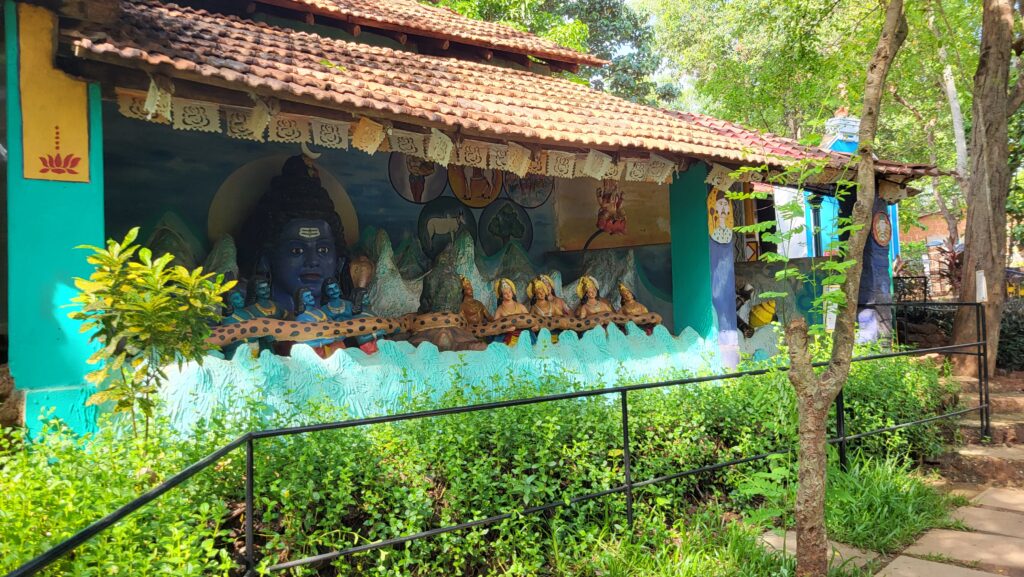
Goa is one of India’s most loved travel destinations, attracting millions of visitors every year. While every traveler has their own reason for falling in love with Goa, the state has something special for everyone. Today, Goa is best known for its luxurious beach resorts, vibrant nightlife, world-class casinos, scenic beaches, delicious seafood, the famous Goan Feni, breathtaking natural beauty, ancient temples, and magnificent churches.
However, did you know that the original Goa was vastly different from the modern tourist paradise we know today?
Even today, many villages across Goa continue to preserve the authentic charm of traditional Goan life. Peaceful living, deep-rooted spirituality, a love for music, theatre, art, and strong cultural values have always been an integral part of Goa’s identity—and in many villages, these traditions continue to thrive.
Over the years, however, modernization has gradually distanced Goa from much of its ancestral heritage. The simple lifestyle, occupations, customs, and village traditions that defined Goa nearly a century ago have almost disappeared.
If you’re curious to discover what Goa looked like 70–100 years ago—how people lived, what professions they practiced, and how their rich traditions shaped everyday life—then a visit to Big Foot Museum, also known as Ancestral Goa Museum, in South Goa is an experience you shouldn’t miss.
Big Foot Museum Goa – A Journey into Goa’s Rich Heritage
The entire concept of this unique open-air heritage museum was created by Maendra Jocelino Araujo Alvares, who beautifully recreated a traditional Goan village with remarkable attention to detail.
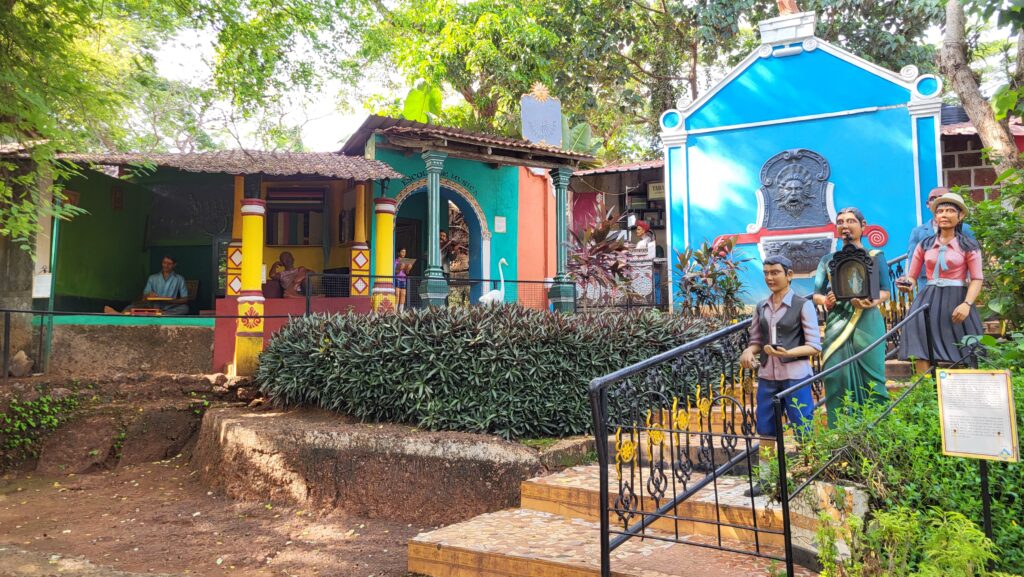
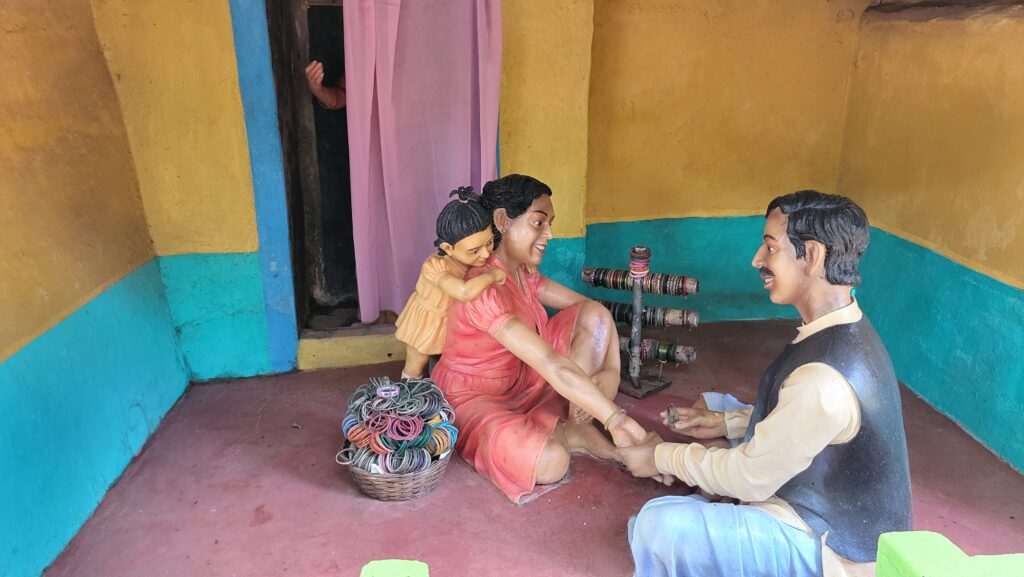
Walking through this heritage village feels like travelling back in time. Every corner of the museum recreates the atmosphere of old Goa, allowing visitors to experience the state’s forgotten past. From miniature traditional homes and authentic village occupations to social classes and daily routines, every exhibit offers an immersive glimpse into Goa’s rural heritage.
One of the biggest highlights of the museum is that it is completely self-guided. Visitors can explore the entire museum while listening to an automated audio guide available in English, Hindi, and Konkani, making the experience both informative and enjoyable.
What to See at Big Foot Museum Goa
The journey begins at the entrance reception area, where visitors are welcomed by fascinating exhibits from old Goa.
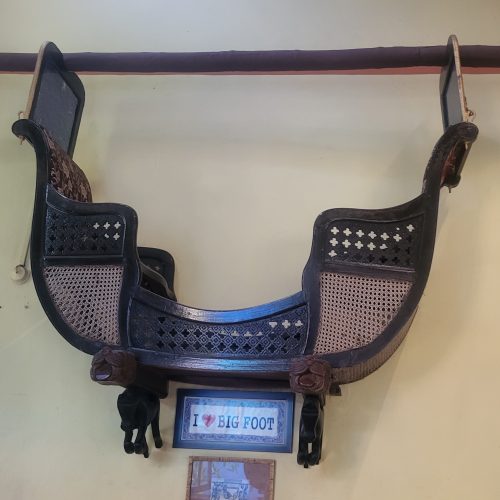
Among the first displays are traditional hand-operated fans and the Machila—a unique mode of transport used in ancient Goa, where two people carried passengers on a manually lifted seat. As you continue exploring Big Foot Museum, you’ll come across a spot where you can experience sitting in this traditional Machila.
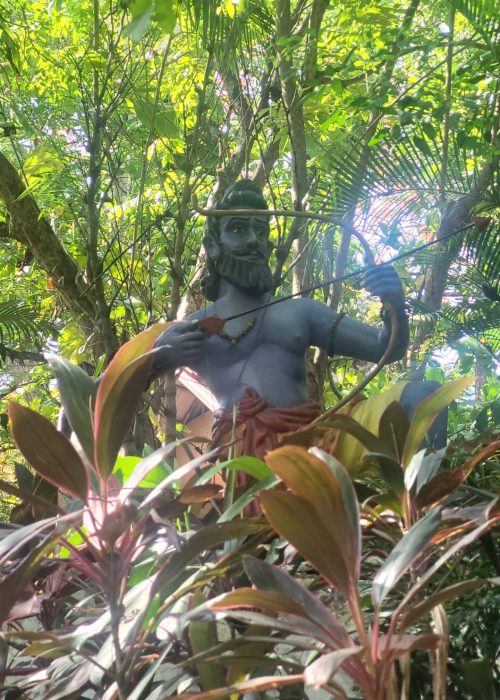
As you step outside the reception area, the first major attraction is the statue of Lord Parashurama, who, according to Hindu mythology, is believed to have created the land of Gomantak (Goa). Learning about this fascinating legend marks the beginning of your journey through ancestral Goa.
Traditional Goan Village Life Recreated
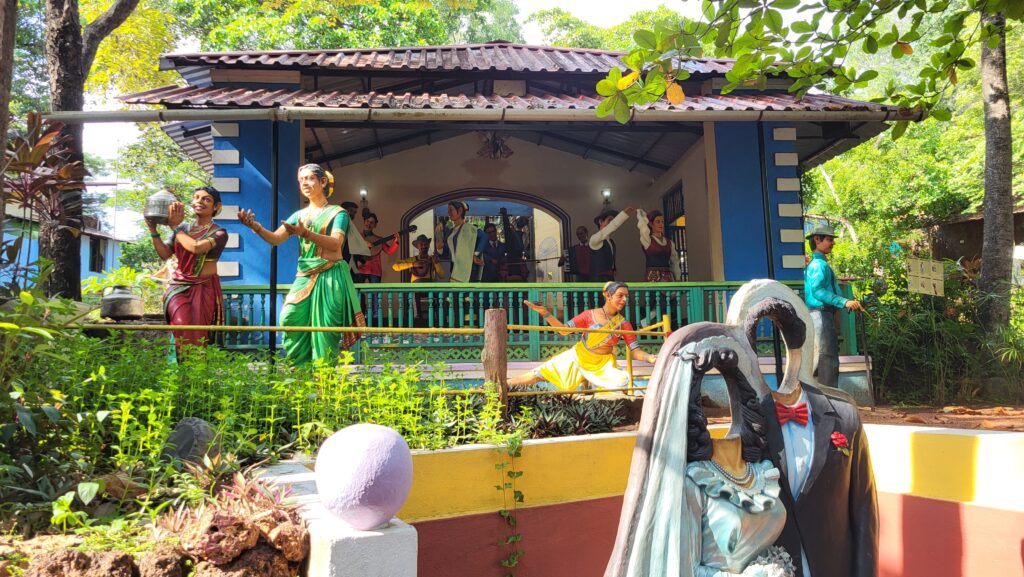
The museum beautifully showcases every aspect of old Goan society with remarkable detail.
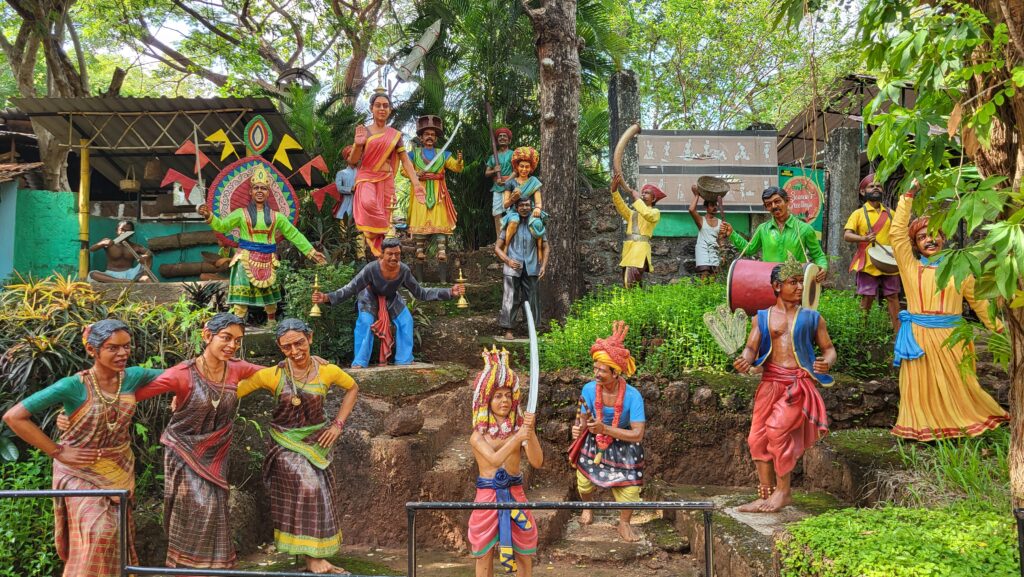
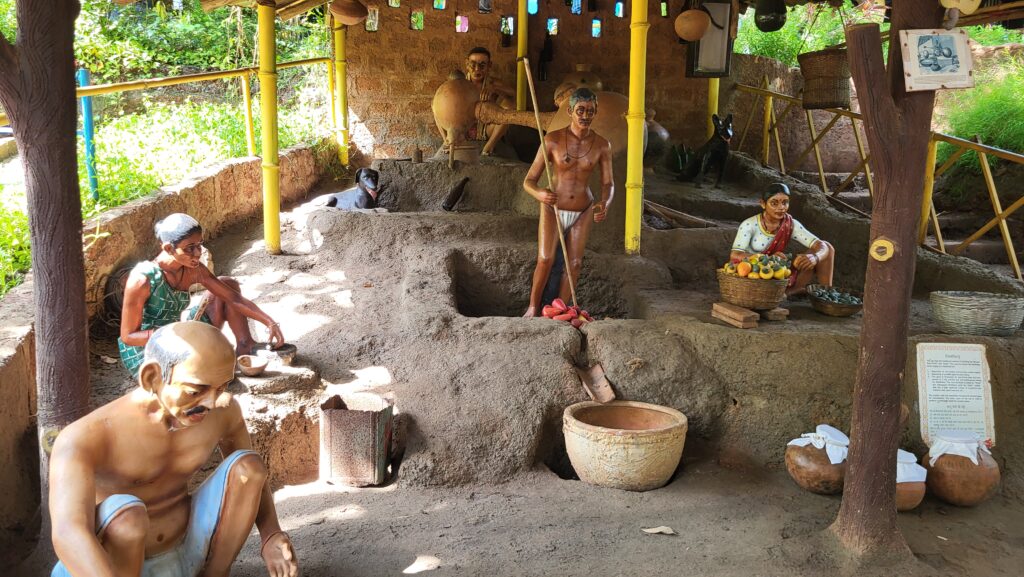
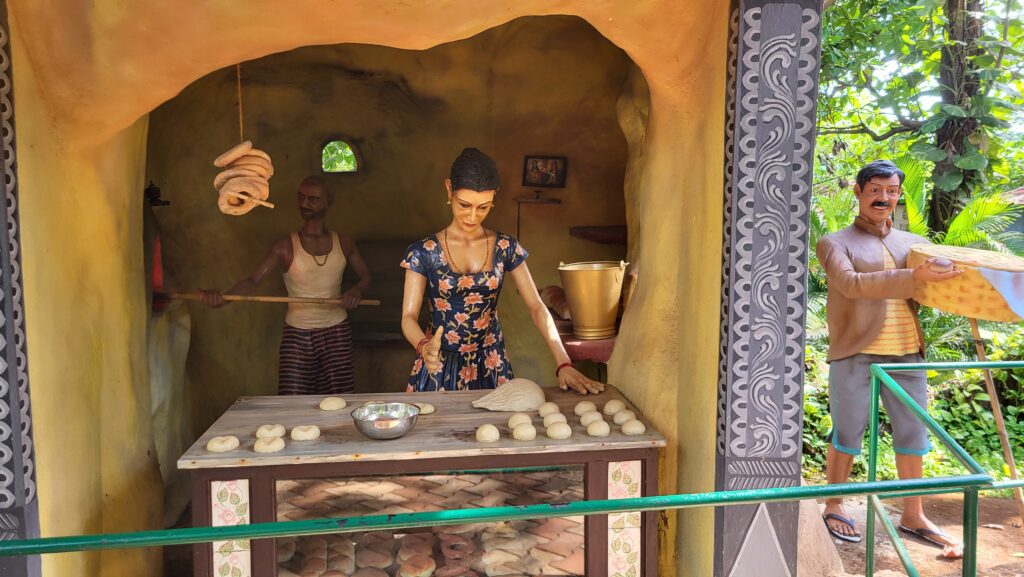
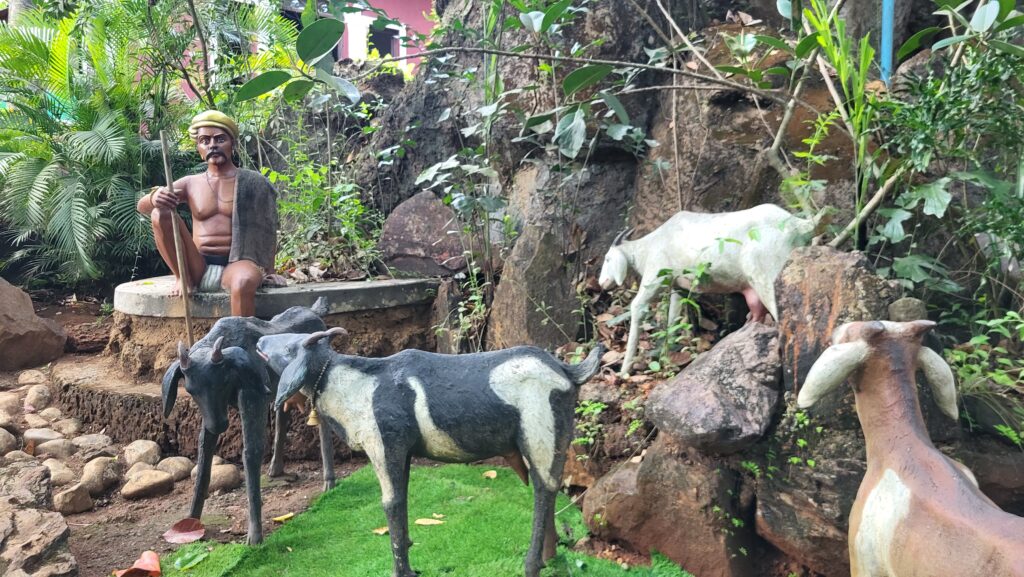
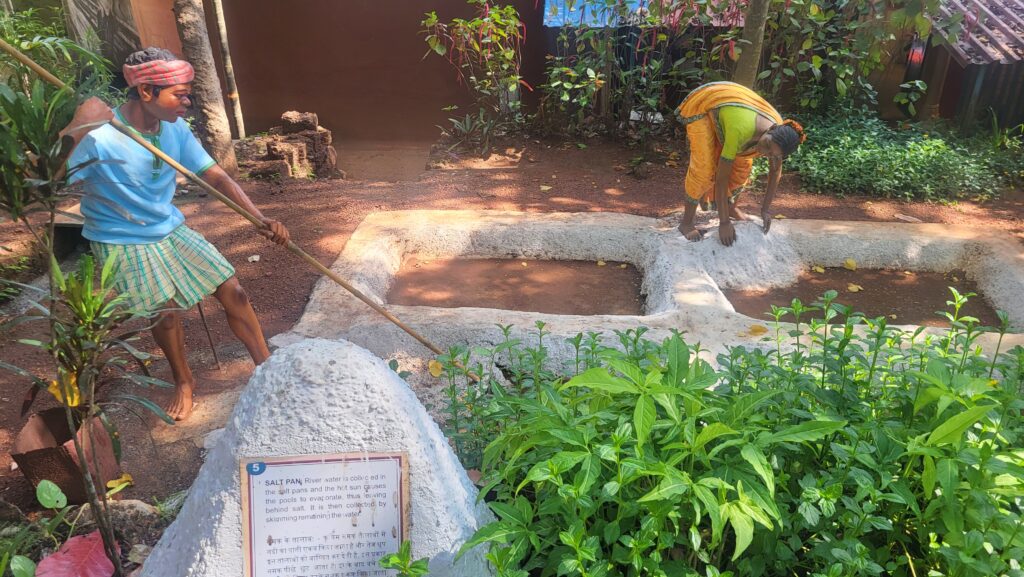
As you walk through the village, you’ll come across life-sized sculptures depicting various traditional occupations, including:
- Fishermen and fisherwomen
- Toddy tappers climbing coconut trees
- Coconut peelers
- Traditional bread makers (Poder)
- Cashew Feni distillation
- Salt pans
- Brass craftsmen
- Cobblers
- Barbers
- Shepherds
- Khaje (traditional sweet) makers
- Flower sellers
- Roasted gram vendors
- Vegetable vendors
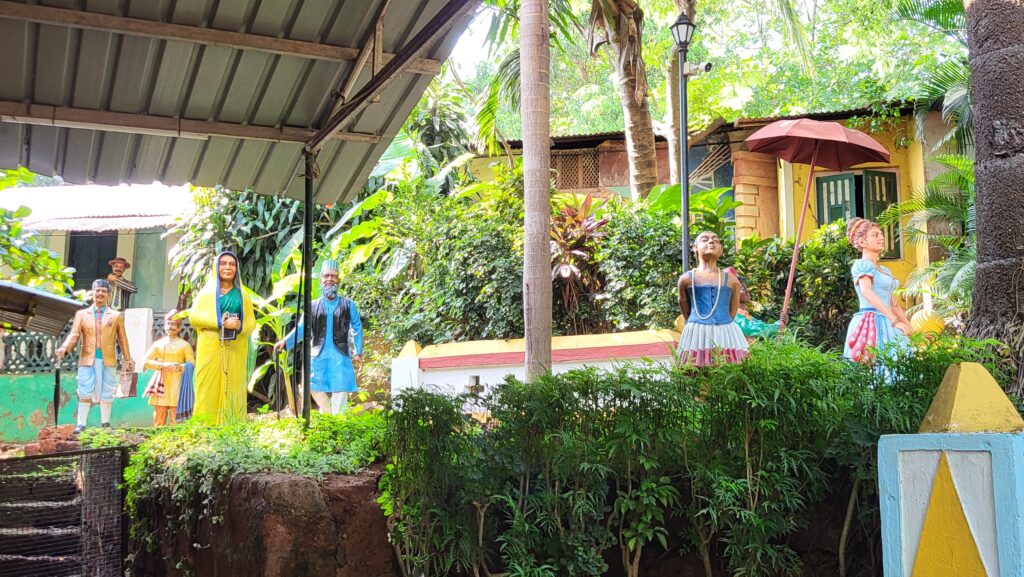
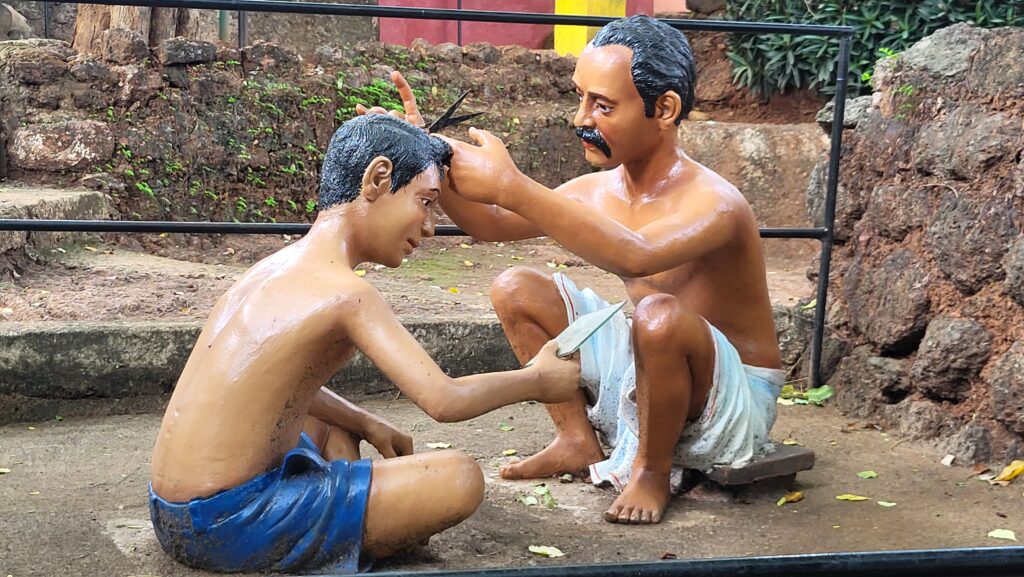
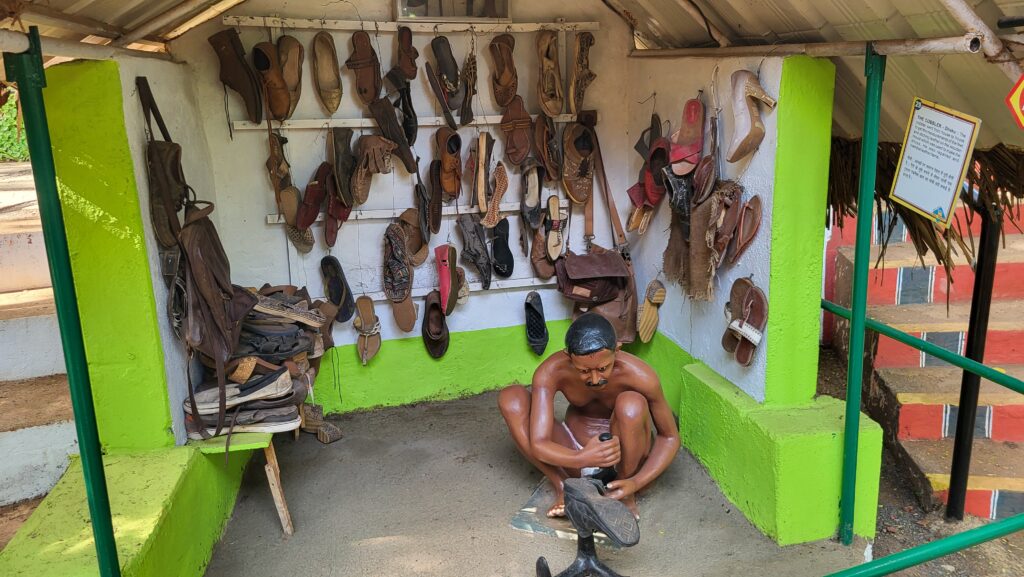
Each exhibit has been recreated so realistically that it feels as though you’ve stepped into Goa’s past.
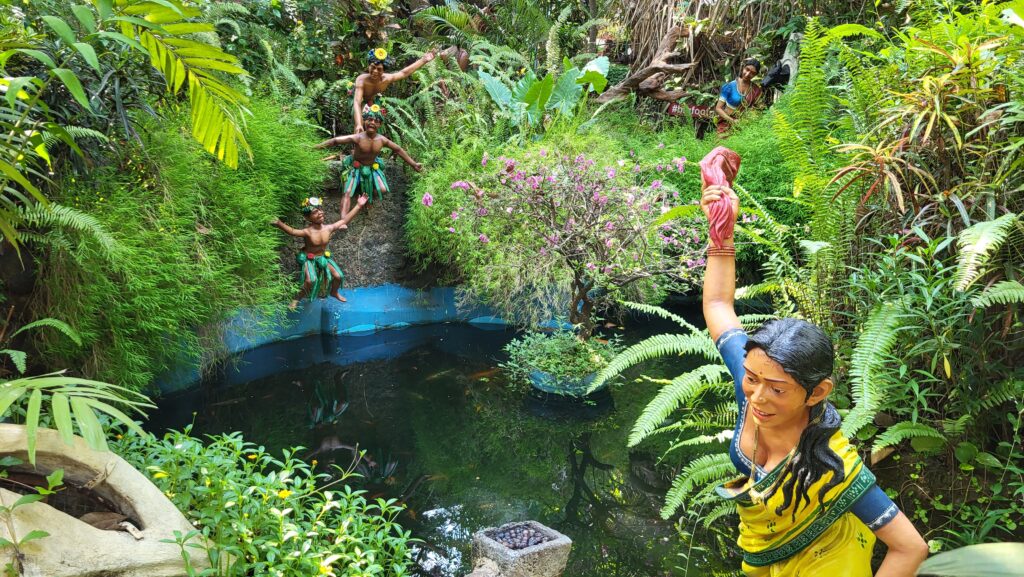
Apart from occupations, the museum also features beautifully crafted scenes of traditional village games, women washing clothes at the village pond, and the famous Gow Kund, where water appears to flow from a sacred cow’s mouth.
Visitors can also witness how Hindu and Christian communities lived together in harmony despite following different customs, traditions, festivals, clothing styles, and architectural designs.
Further along the trail, bird lovers can enjoy a delightful collection of colourful parakeets, various species of pigeons, roosters, and several other beautiful birds.
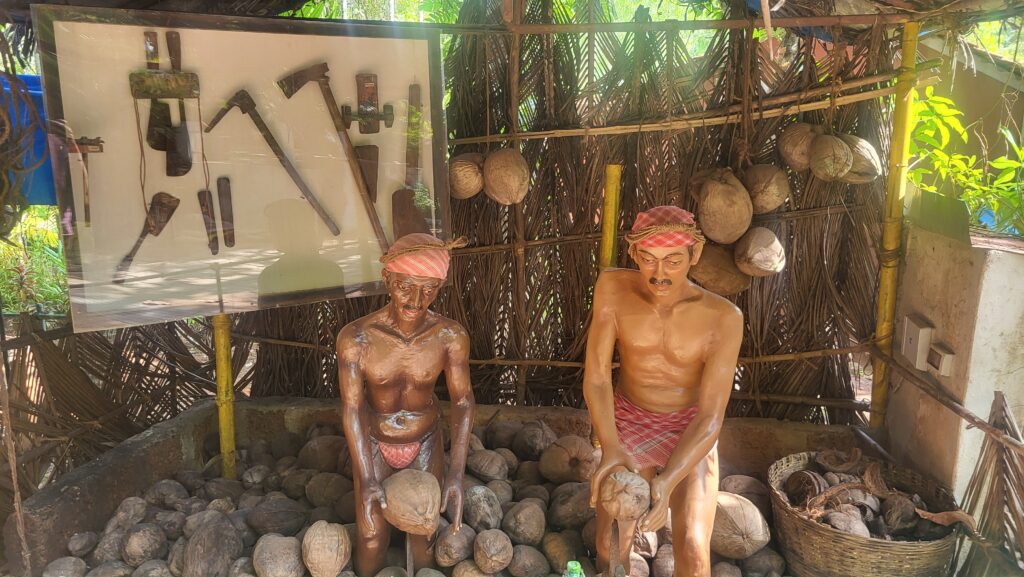
Why is it Called Big Foot?
After exploring the village, one question naturally comes to mind—
Why is this place called “Big Foot”?
The answer lies inside a cave further ahead, where visitors discover the famous Big Foot impression along with the fascinating legend associated with it.
The Legend Behind Big Foot Goa
The story revolves around a wealthy man named Mahadar.
Mahadar was not only rich but also exceptionally kind and generous. He was widely respected for helping the poor and needy whenever they required assistance.
Unfortunately, several greedy and lazy villagers began taking advantage of his generosity. They fabricated stories of hardship simply to receive money and valuables from him.
With his compassionate nature, Mahadar never refused anyone. He continued giving away his wealth until eventually he lost everything he owned.
After losing all his wealth, Mahadar was left homeless and helpless. Ironically, when he needed help the most, none of the people he had once supported came forward to assist him. During this difficult period, his beloved wife also passed away, leaving him completely alone.
Despite facing immense hardship, Mahadar’s compassionate and selfless nature never changed. Pleased with his unwavering kindness, God appeared before him in a dream and offered to restore all the wealth he had lost.
However, Mahadar asked for nothing for himself. Instead, he prayed for the very people who had deceived and wronged him. Deeply moved by his extraordinary generosity, God granted him another boon.
Mahadar requested only a small place where he could stand and perform penance for the welfare of mankind.
To test the sincerity of his devotion, God showed him a scorching hot rock. Without a single complaint, Mahadar stood barefoot on the hot rock on one leg and meditated for many years.
His unwavering faith and devotion eventually pleased the Almighty. God blessed Mahadar, granted all his wishes, and took him to heaven.
Before leaving, Mahadar’s footprint remained permanently imprinted on the rock where he had performed his penance. This sacred footprint later became famous as the Big Foot, giving the museum its unique name.
Even today, many people believe that anyone who offers sincere prayers at this sacred footprint with a pure heart will have their wishes fulfilled.
The Sacred Big Foot Footprint
As you continue exploring the museum, you’ll eventually arrive at a small cave that houses the legendary Big Foot footprint.
The atmosphere inside the cave is peaceful, spiritual, and deeply reverential.
Whether or not you believe in the legend, standing before the footprint offers a moment of reflection and adds a unique spiritual dimension to the overall museum experience.
The Magnificent 14-Metre Saint Mirabai Sculpture
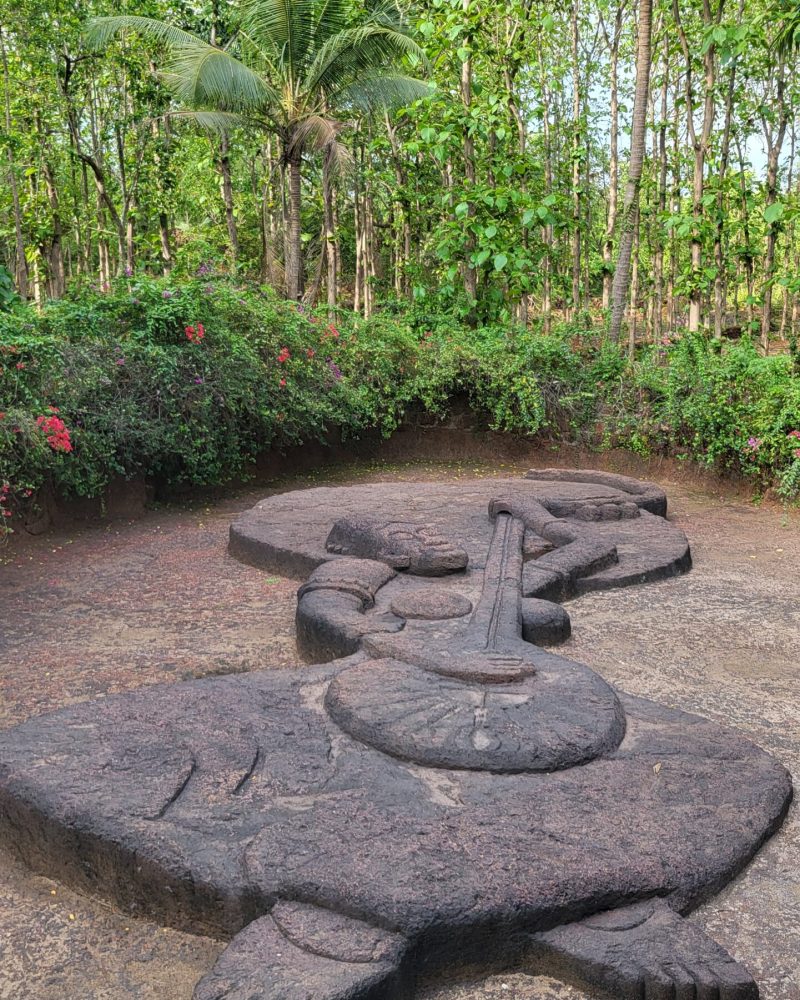
One of the biggest highlights of the Big Foot Museum is the breathtaking 14-metre-long sculpture of Saint Mirabai.
This remarkable masterpiece was carved by renowned Goan artist Maendra Jocelino Araujo Alvares in just 30 days. The sculpture has earned a place in the Limca Book of Records as the longest laterite (red stone) sculpture in India.
Standing before this massive work of art is truly an unforgettable experience. Every intricate detail reflects the artist’s exceptional craftsmanship.
Saint Mirabai is depicted playing the Ektara, completely immersed in devotion. Her forehead is adorned with traditional Kumkum, while graceful ornaments such as an armlet and anklets enhance the sculpture’s beauty and lend it an unmistakably Indian character.
Explore the Herbal and Spice Garden
Apart from its cultural exhibits, the museum also features a small yet fascinating Herbal and Spice Garden.
Visitors can explore a variety of medicinal plants, herbs, and traditional spices that have been used in Goan households for generations. Informative displays explain the medicinal and culinary significance of many of these plants, making the garden both educational and refreshing.
How to Reach Big Foot Museum Goa
Big Foot Museum is located in Loutolim village in South Goa, just 400 metres from the Saviour of the World Church.
The museum is easily accessible from all major parts of Goa.
Distance from major locations:
- Madgaon – approximately 10 km
- Panaji – approximately 29 km
- Goa International Airport (Dabolim) – around 25 km
- Madgaon Railway Station – approximately 10–12 km
Visitors can conveniently hire a taxi through the Goa Miles app, rent a scooter, or drive their own vehicle to reach the museum.
Nearby Attractions to Visit
One of the advantages of visiting Big Foot Museum is that several famous tourist attractions are located nearby, making it easy to include them in your itinerary.
Some popular places worth exploring include:
- Shri Mahalasa Narayani Temple, Verna
- Birla Temple, Vasco
- Colva Beach
- Benaulim Beach
- Cabo de Rama Fort
Best Time to Visit Big Foot Museum Goa
Since Big Foot Museum is an open-air heritage museum, the overall experience largely depends on the weather. The ideal time to visit is between October and March, when Goa enjoys pleasant temperatures and comfortable sightseeing conditions.
It is advisable to avoid visiting during April and May, as the summer heat and humidity can make walking around the open museum quite tiring. Similarly, the monsoon season (June to September) brings heavy rainfall to Goa, which may affect your overall sightseeing experience.
Big Foot Museum Goa Timings & Entry Fee
Before planning your visit, here are the essential details:
Timings: 9:00 AM to 6:00 PM (Open Daily)
Entry Fee: ₹150 per person
(It is always advisable to check the latest ticket prices before your visit, as they may change over time.)
Why You Should Visit Big Foot Museum Goa
Goa is much more than beaches, nightlife, casinos, and seafood. Hidden away in the peaceful village of Loutolim, Big Foot Museum offers a rare opportunity to experience the Goa that existed long before tourism transformed the state.
From traditional occupations and village life to folklore, spirituality, architecture, art, and centuries-old customs, every corner of this heritage museum tells a fascinating story of Goa’s rich cultural legacy.
Whether you’re a history enthusiast, a culture lover, a photographer, or simply someone looking to explore Goa beyond its beaches, Big Foot Museum promises a unique and memorable experience.
If you truly want to understand the soul of Goa, make sure to add Big Foot Museum (Ancestral Goa) to your travel itinerary. It is a journey into the state’s forgotten past that will leave you with a deeper appreciation of Goa’s timeless traditions and heritage.