The Real Goa Beyond the Beaches
For those who think Goa is only about beaches, water sports, and endless fun, I would like to say this again and again—the true experience of Goa is very different and deeply enchanting. As a Goan myself, I am far more drawn to Goa’s naturally beautiful villages than to its crowded beaches. Chandor is one such village, widely known for the Braganza House.
Chandor – Goa’s First Capital
Chandor village stands out for its unique character and deep historical significance. Its original name was Chandrapura, and it holds the distinction of being Goa’s first capital, serving as the seat of power from the Bhoja dynasty to the Kadamba dynasty. Today, however, all that remains of its once-glorious past are the ruins of an ancient fort and a solitary Nandi statue, quietly bearing witness to its rich history.
Chandor – A Village Adorned with Heritage Homes
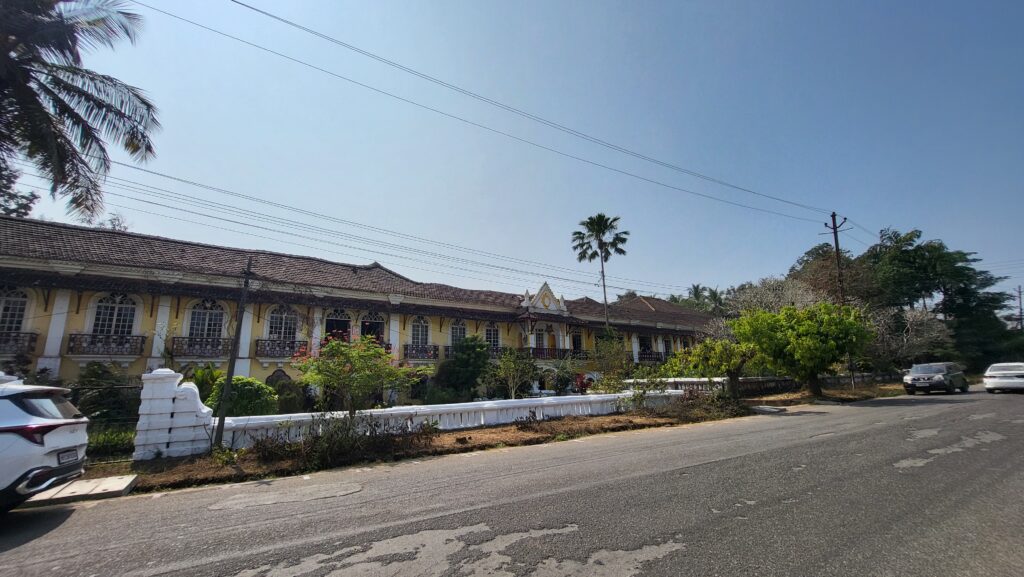
Still known as Goa’s first capital, Chandor today draws visitors for its centuries-old ancestral homes, or heritage houses. In a few parts of Goa, these distinctive Goan houses continue to stand proudly, and Chandor is especially famous for its grand Indo-Portuguese mansions. Renowned for its unique architecture, the village is home to two remarkable landmarks—the 17th-century Braganza House and the pre-Portuguese era Sara Fernandes House.
Braganza House – A Grand 17th-Century Mansion
With its many striking heritage homes, Chandor felt like a place waiting to be explored, and the opportunity finally presented itself. We went there especially to visit the Braganza House, also known as the Menezes Braganza Pereira House.
The massive Braganza House stretches along an entire side of Chandor’s village square and immediately draws your attention even from the road. The mansion is divided into two sections, each owned by a different branch of the Braganza family descendants.
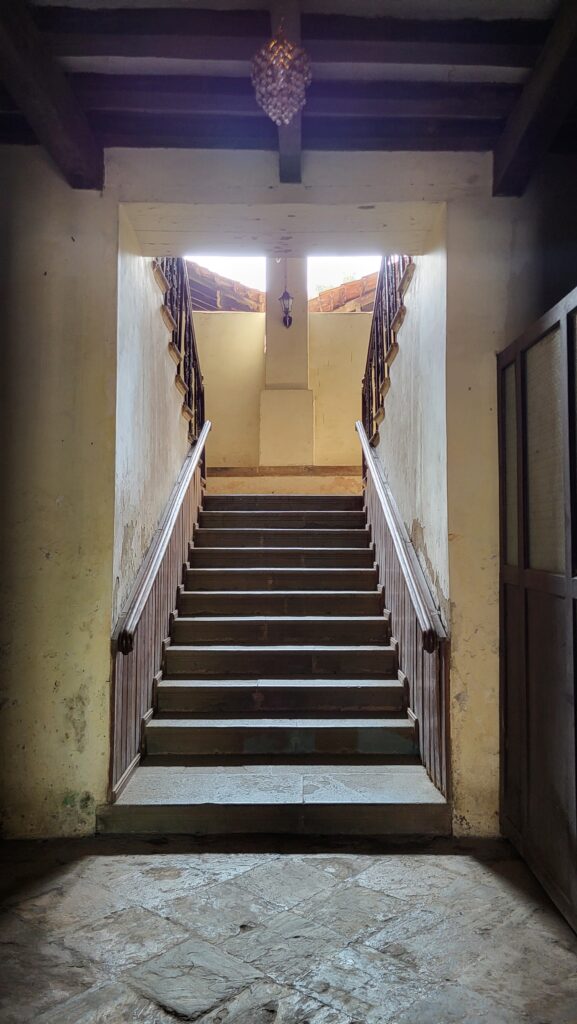
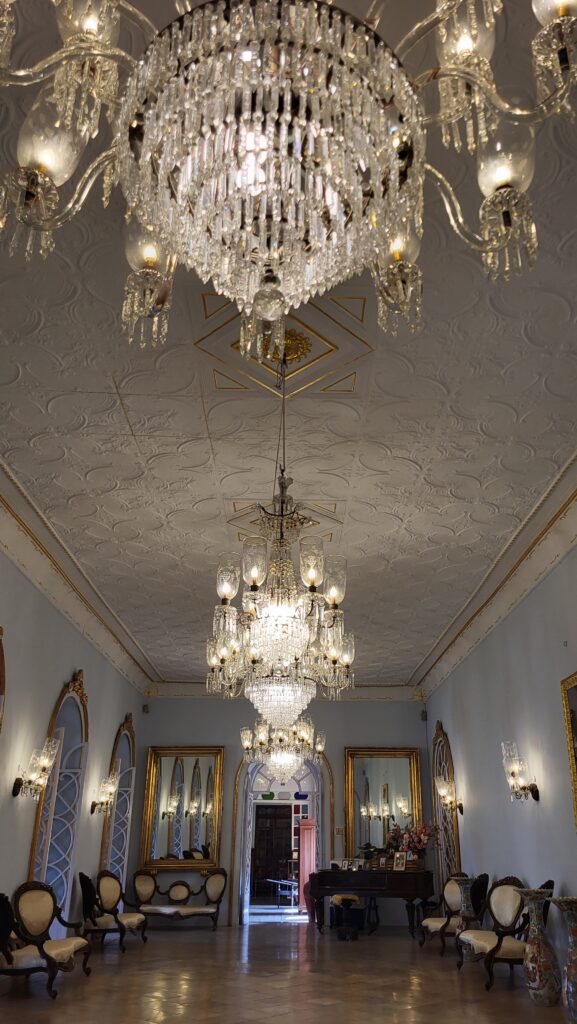
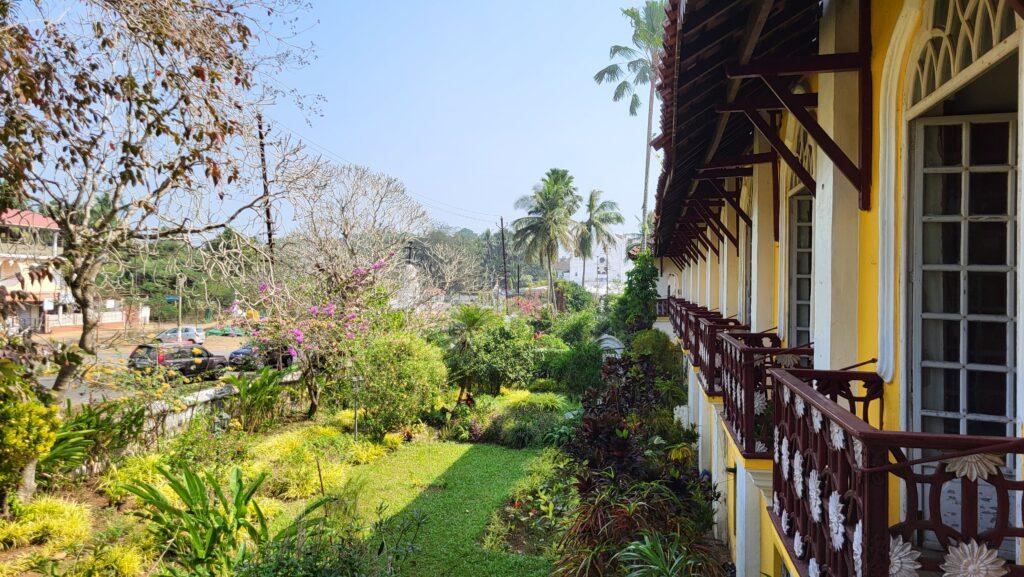
As we entered the property, taking in the beautifully landscaped gardens on either sides and noticing the charming stone benches, we were already beginning to sense the age of the house. While climbing the steps, a slightly amusing thought crossed my mind—it felt as though we were walking into Ali Baba’s cave. After witnessing the grandeur inside, I realized how apt that thought truly was.
Originally, the Braganza House belonged to Francisco Xavier. Since he had no sons, the house was later divided into eastern and western wings between two of his three daughters. Today, both sections remain with the families descended from those daughters. Built in the Portuguese style, it is considered the largest mansion of its kind in Goa.
The West Wing – Legacy of the Menezes–Braganza Family
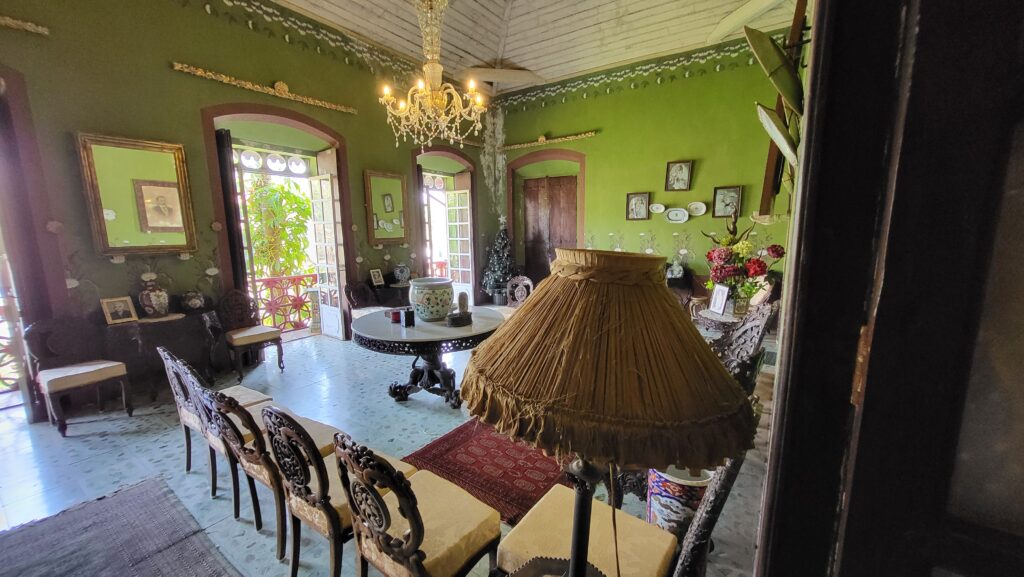
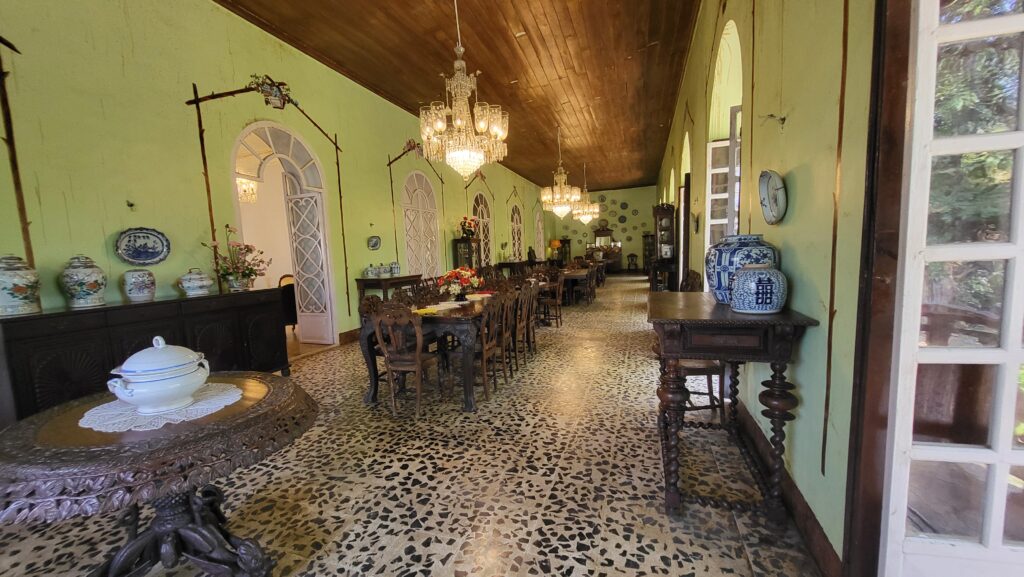
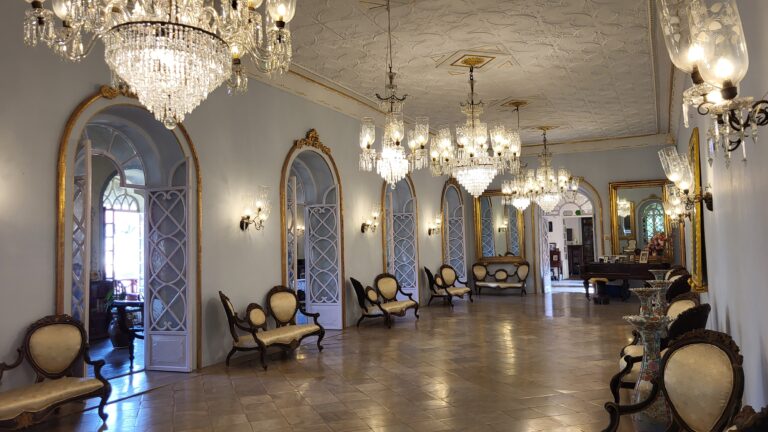
The western wing of the house belongs to the descendants of the Menezes–Braganza family. This section has been beautifully preserved and immediately draws attention with its antique furniture and rare artefacts. Maintained almost like a private museum, the house features elegant Belgian glass chandeliers, Italian marble flooring, Chinese porcelain brought from Macau, hand-painted Japanese ware, and precious antiques collected from Portugal, China, and across Europe.
Portraits displayed on the walls throughout the house introduce us to the ancestors of the Menezes–Braganza family. Among them are portraits of Jovier Menezes and the freedom fighter Luís Menezes Braganza. Interestingly, the frame of Jovier Menezes’ portrait is carved with images of Hindu deities. We were told that before converting to Christianity, the family followed Hinduism, which is why these motifs appear in the artwork.
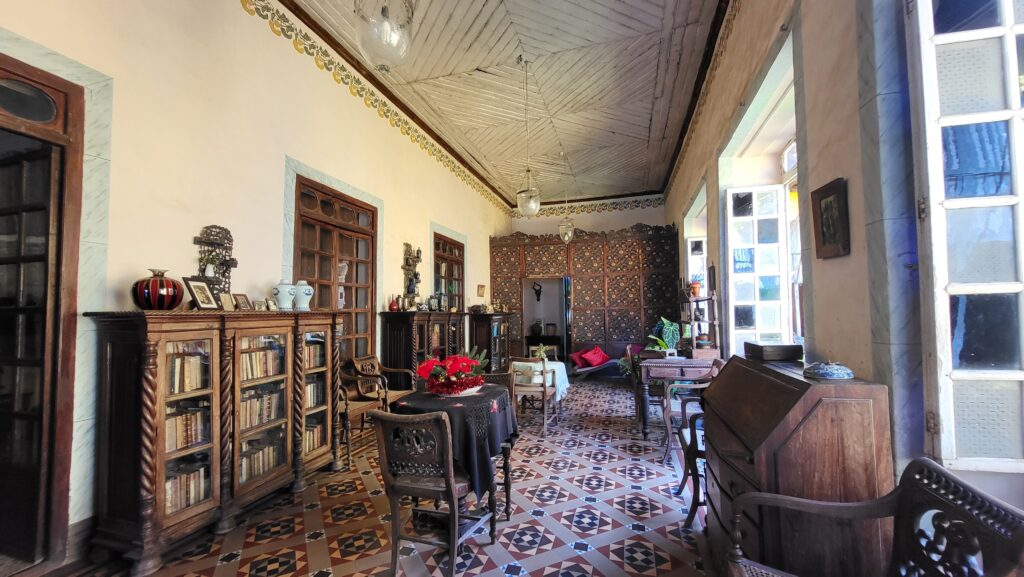
One part of the house houses an extensive library of around 5,000 books, including the personal collection of renowned journalist Luís Menezes Braganza—an important figure in the Goa Liberation Movement—along with works by many other authors. The books, preserved in leather bindings, are in four different languages.
The original English Victorian tiled flooring here remains pleasantly cool, regardless of the weather or time of day.
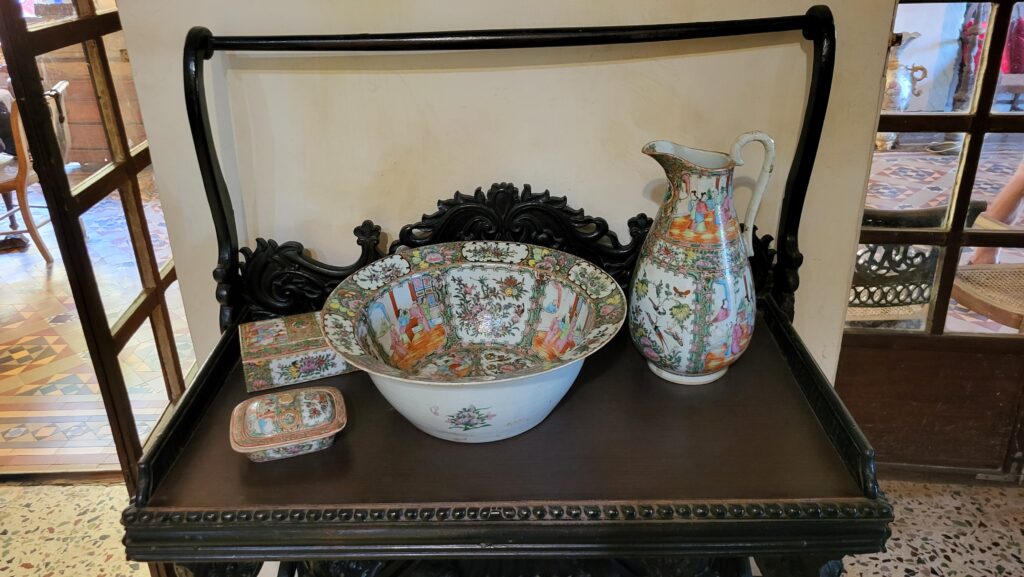
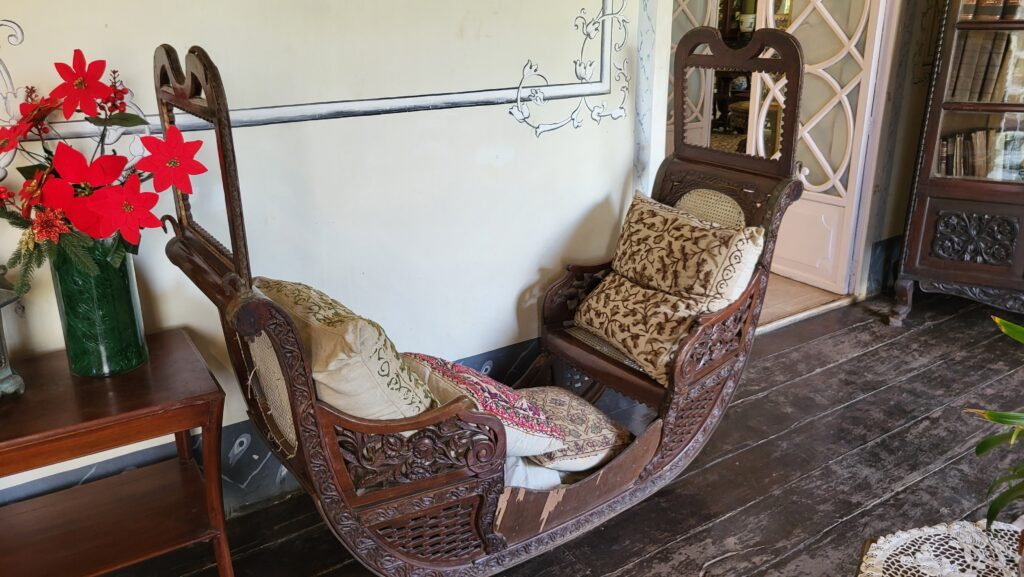
Another highlight is the grand, elongated dining room, with a long row of tables arranged to seat nearly sixty people at once—a sight that is both striking and elegant.
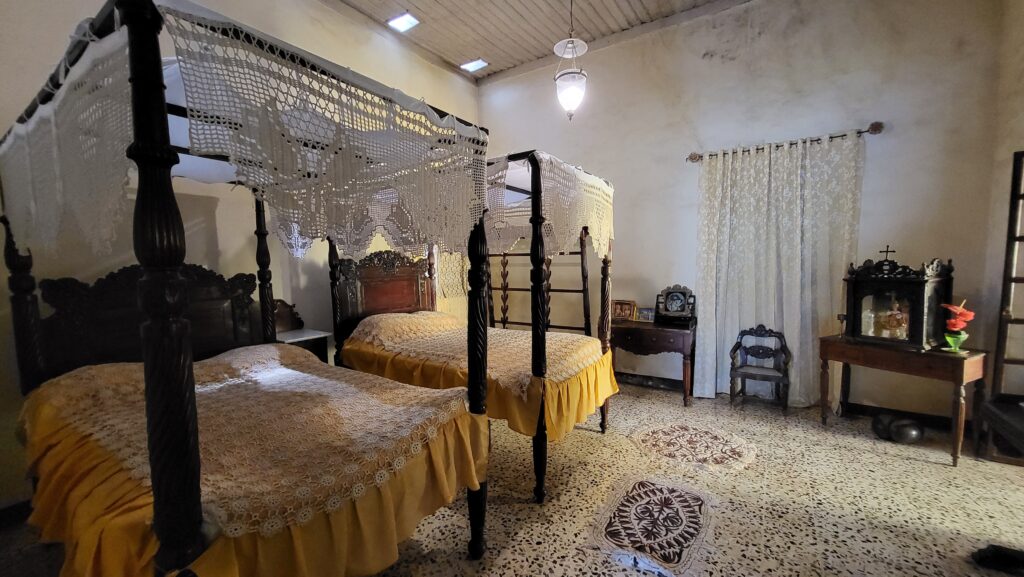
One of the bedrooms contains two massive beds that are as old as the house itself, taller and grander than ordinary beds. Writing desks are thoughtfully placed throughout the house wherever natural light falls generously. One particular table, fitted with multiple compartments and hidden drawers, left us completely fascinated.
There is also a uniquely designed two-seater sofa that allows the occupants to sit facing each other comfortably and converse. Comfortable armchairs, stained glass windows that bathe the floors in colourful light during sunset, large mirrors framed with delicate gold leaf, and many other rare and intriguing objects add to the charm and splendour of this remarkable space.
The East Wing – Home of the Pereira–Braganza Family
The eastern wing of the house is still inhabited by the Pereira–Braganza family. This section too holds an impressive collection of valuable antiques gathered from across the world over several decades. Belgian mirrors and finely carved rosewood furniture add to the quiet elegance of the space.
Although the furniture follows Italian design influences, it has been crafted using Goan rosewood by local Goan artisans. Remarkably, some of the chairs are nearly 450 years old and are still sturdy and in everyday use.
One of the key highlights of this wing is the spacious ballroom with its Italian marble flooring. Equally special is the small private family chapel within the house, where sacred relics, including a relic of St. Francis Xavier, are carefully preserved.
An Enduring Heritage Shared with Visitors
Both wings of the mansion are open to tourists. Visiting hours are generally from 9 a.m. to 5 p.m., although timings may vary depending on the convenience and availability of the families residing there. During the visit, a family member or a representative from each wing personally guides visitors through the house, sharing detailed stories about the mansion and the many priceless objects preserved within it.
Entry Fee and Contribution for Preservation
An entry contribution of ₹500 per person is charged to visit both sections of the house. Alternatively, visitors can enter a single section by paying a contribution of ₹250. Since the Braganza House does not receive any kind of government funding, the amount collected from visitors is used entirely for the upkeep and maintenance of this historic mansion.
Location of Braganza House
- Village: Chandor
- Region: South Goa, India
- Landmark: Stands prominently on the village square, near the church.
- Accessibility: Easily reachable from Margao (around 15km away).
Braganza House – How to Reach
Chandor is located about 40 km from Panaji. If you are travelling by car or taxi, it takes roughly an hour to reach. From Panaji, take National Highway 66 and then turn towards Chandor from Margao via Ghogal.
Margao railway station is around 10 km from the Menezes Braganza House. Vasco is approximately 36–37 km away, while Sanvordem railway station is the closest, at a distance of about 7 km.
If you are travelling by air, Dabolim Airport is the nearest airport, located roughly 35 km from Chandor.