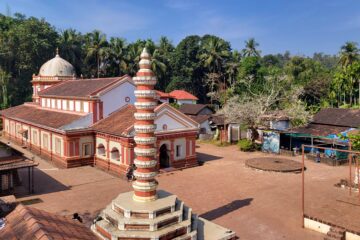
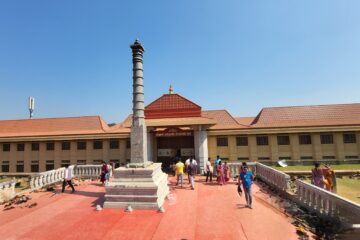
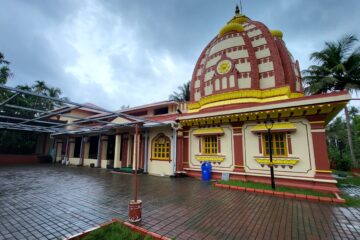
I particularly love Goa for its incredibly beautiful temples. Although the architecture of many Goan temples may appear somewhat similar, the experience and sense of joy that each temple offers are truly incomparable. Goa is home to countless temples worth visiting, and among the temples that particularly attract tourists, Mangeshi Temple at Mangeshi and Shantadurga Temple at Kavlem deserve special mention.
The Shantadurga Temple is located in Kavlem village in Ponda Taluka, Goa. Situated around 30 km from Panaji, this magnificent temple stands on the slopes at the foothills of a mountain range. Surrounded by lush green vegetation and blessed with a peaceful and scenic atmosphere, it is regarded as one of the most beautiful and grand temples in Goa.
Shantadurga Temple Architecture: A Beautiful Indo-Portuguese Blend
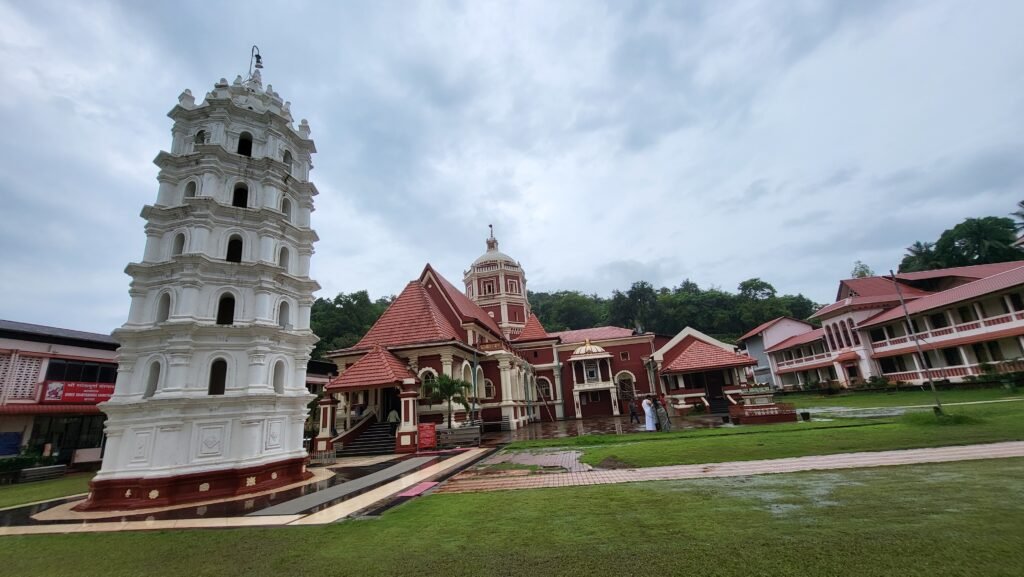
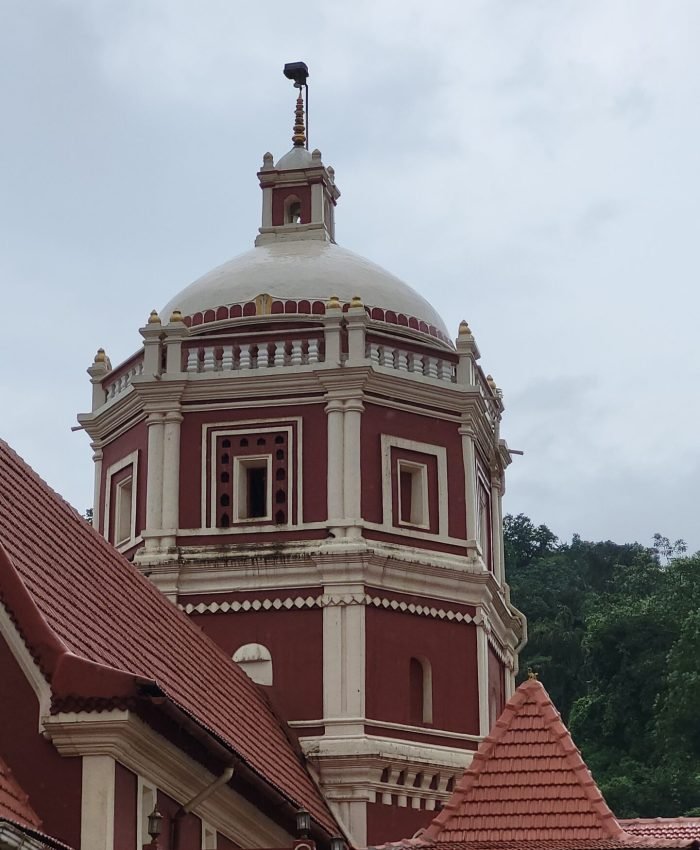
One of the most distinctive features of Shantadurga Temple Kavlem is its unique architectural style, which showcases a beautiful blend of Indian and Portuguese architecture. The temple’s design is slightly different from that of many other temples in Goa.
Its architectural features include a pyramidal-shaped shikhara (temple tower), Roman-style arched windows, and a flat dome surrounded by balustrades. These elements give the temple a distinctive appearance and reflect the influence of different architectural traditions.
The contrasting combination of dark red and white colours makes the temple particularly attractive. Spacious agrashalas (guest houses/dharmashalas) have been constructed on both sides of the main temple.
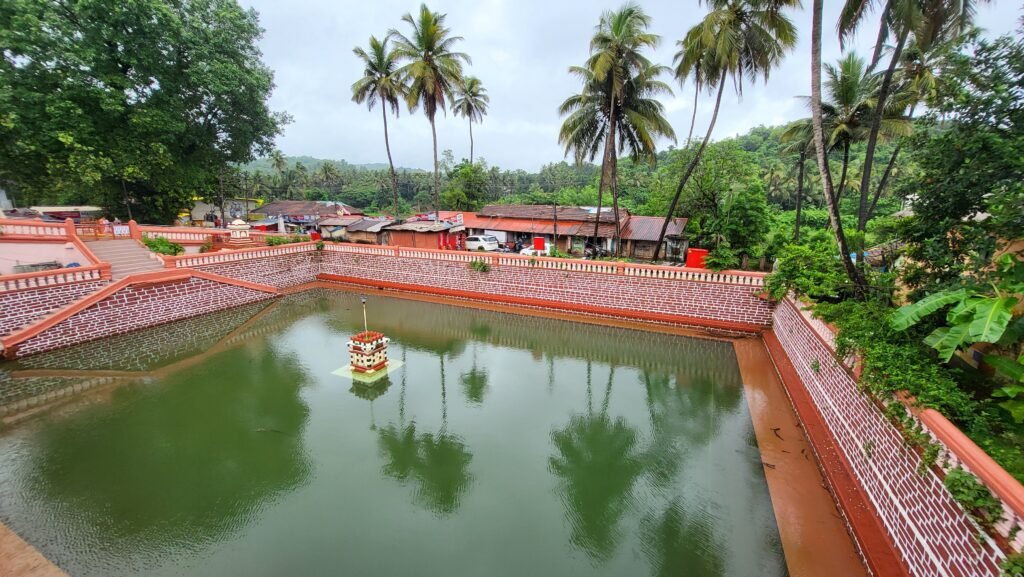
One of the most captivating features of the temple complex is the clean pushkarni (temple pond) visible as visitors enter the temple premises, along with the magnificent Deepastambha (lamp tower) standing in front of the temple.
During various temple festivals, the Deepastambha is illuminated with countless lamps. Its radiant appearance is so mesmerizing that devotees visiting the temple are left spellbound.
Mythological Story of Adimaya Shantadurga
Goddess Shantadurga is regarded as a peaceful form of Adimaya Durga. According to the mythological story associated with the goddess, a fierce battle once broke out between Lord Shiva and Lord Vishnu. The terrible war caused immense distress throughout the entire creation.
At that time, Lord Brahma prayed to Adimaya Durga and requested her to intervene and stop the war.
The Goddess held Lord Shiva with one hand and Lord Vishnu with the other, bringing about reconciliation between the two. The war came to an end, and peace was restored to the world.
It is because of this divine intervention that this peaceful form of Adimaya Durga came to be known as ‘Shantadurga’, meaning the goddess who brings peace.
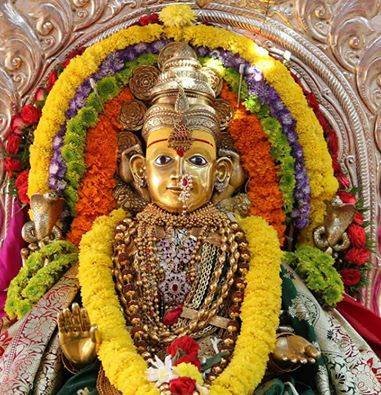
In remembrance of this mythological event, the sanctum sanctorum of Shantadurga Temple has idols of Lord Shiva and Lord Vishnu installed on either side of the idol of the Goddess.
Goddess Shantadurga is regarded as the wife of Lord Shiva, and therefore worshipping Lord Shiva along with the Goddess is considered essential. For this reason, a Shivalinga made of black stone, measuring approximately six inches in height, is installed beside the idol of the Goddess in the sanctum.
During the Abhisheka (ritual bathing), both the Goddess and the Shivalinga are worshipped together.
History of the Shantadurga Devi Idol
The idol currently seen in the sanctum of the temple has a fascinating history.
The original idol of the Goddess in the temple was stolen by Pathans in 1898. Following this, Shri Laxman Krishnaji Gaitonde sculpted a new idol of Goddess Shantadurga.
The new idol was formally consecrated on 19 March 1902, corresponding to Phalgun Shukla Dashami, Shaka 1823.
However, until the installation of the new idol, Shantadurga Devi was worshipped along with the idol of Shri Bhavanishankar under the guidance of the Gaudapadacharya of Kavlem Math.
After the new idol was installed, the earlier idol was placed in a cupboard shrine located behind the main idol of the Goddess. The old idol continues to receive daily worship even today.
History of Shantadurga Temple, Kavlem
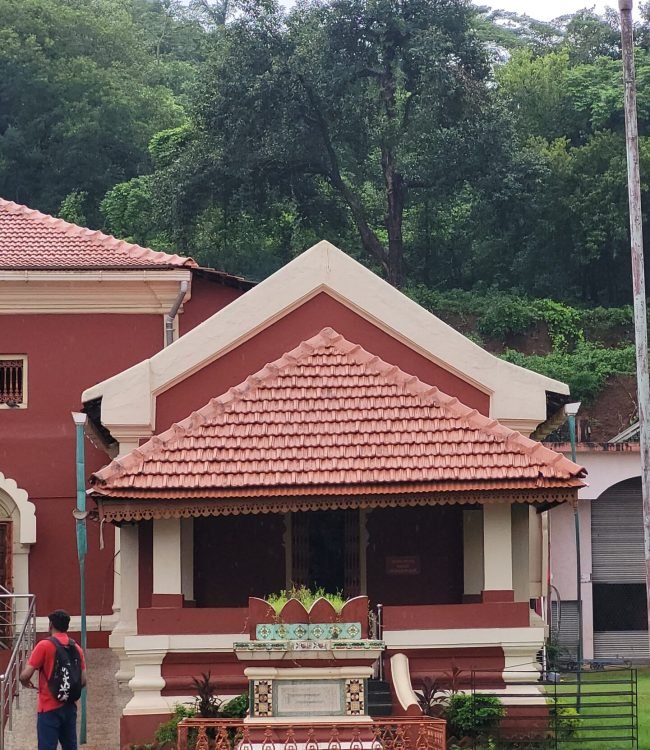
The original temple of Shantadurga Devi was located at Keloshi (Quelossim). During that period, the Goddess was worshipped by the name Shanteri Devi.
After the arrival of the Portuguese rule in Goa, increasing religious persecution created concern among Hindus about the safety of their temples and the idols of their deities.
At that time, devotees of Shantadurga Devi and Mangesh left their homes on a moonless night, carrying the idol of the Goddess and the Shivalinga on their heads. They crossed the Zuari River and entered the territory ruled by Adil Shah.
Via Dandi, they reached Kavlem in Ponda Taluka. After seeing the beautiful natural surroundings of the area, they chose the location to install the idol of Goddess Shantadurga.
The devotees were fortunate to find a location that was as scenic and beautiful as Keloshi, the Goddess’s original home.
Construction of the Present Shantadurga Temple
The foundation of the present magnificent temple was laid during the reign of Chhatrapati Shahu Maharaj, at the request of his minister, Naroram Mantri.
The construction of the temple began around 1730, and the temple was completed in 1738. It was subsequently renovated from time to time during the 20th century.
It is believed that Shri Shantadurga Devi herself inspired Naroram Mantri to build the magnificent temple.
Naroram Mantri’s full name was Naroram Shenvi Rege. Originally from Kochara village in the Vengurla region, Naroram served as a minister in the court of Chhatrapati Shahu Maharaj and therefore came to be known as Naroram Mantri.
He had deep faith that the honour, fame and prosperity he had attained were the result of the blessings of Goddess Shantadurga. Therefore, he resolved to build a magnificent temple for the Goddess at his own expense.
Construction began around 1730, and with the support of other mahajans, the grand temple was completed.
Through the efforts of Naroram Mantri, Chhatrapati Shahu Maharaj granted Kavlem village as an inam (endowment) to the temple in 1739. Naroram Mantri also made several donations to the temple.
In recognition of his remarkable contribution to the temple, his family continues to receive special honour during religious and cultural programmes held at the temple.
Major Festivals at Shantadurga Temple
The annual Shantadurga Temple Jatra (festival) is celebrated every year during the month of Magha, which generally falls in January or February, with great devotion and enthusiasm.
During the Jatra, the idol of the Goddess is taken out in a grand procession in a golden palanquin (Suvarna Palkhi). Thousands of devotees visit the temple to witness this important religious celebration.
Apart from the annual Jatra, several other important religious festivals are also celebrated at the temple:
- Lalkhi Utsav
- Muktabharani Utsav
- Tulsi Vivah
- Kala Utsav
Shantadurga Temple Kavlem Timings
The temple is open for darshan during the following hours:
- Morning: 5:30 AM to 12:30 PM
- Afternoon Break: 12:30 PM to 1:30 PM
- Afternoon to Evening: 1:30 PM to 8:30 PM
The peaceful surroundings, lush greenery, distinctive architecture, fascinating history and deep religious significance make Shantadurga Temple in Kavlem, Goa, a must-visit temple in Goa.
For anyone interested in exploring Goa’s temples, heritage, traditional architecture and spiritual destinations, a visit to this beautiful temple offers a memorable experience.